SSDI Denied Twice: What to Do at the Hearing Level
TL;DR: Being denied at both the initial and reconsideration levels puts you in the majority. About 64% are denied initially and most are denied again at reconsideration. But the ALJ hearing is where 45% to 62% of claimants win. Request a hearing within 60 days of your reconsideration denial. Use the waiting period (12 to 18 months) to get strong RFC forms, gather new evidence, find an attorney, and prepare your testimony.
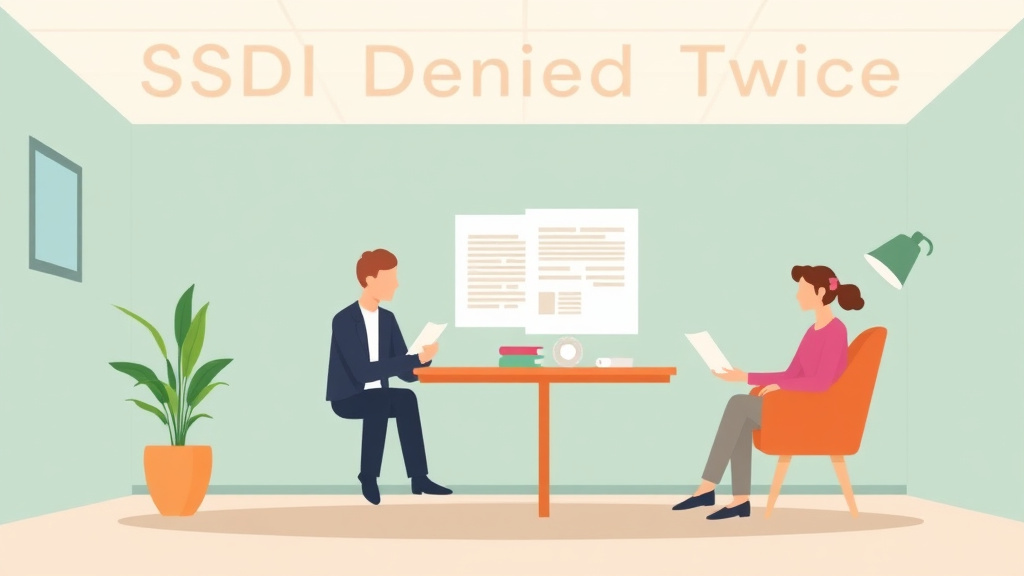
Two denials feels like the system is telling you to give up. It is not. It is telling you that the paper review process failed, which it does for the majority of claimants. The ALJ hearing is a fundamentally different process, and the odds shift dramatically in your favor.
Arrive at your hearing at least 30 minutes early. Bring a government-issued photo ID and any documents you submitted that you want to reference during testimony. Practice describing your daily limitations in concrete terms. Instead of saying 'I can't do much,' say something like 'I can stand for about 10 minutes before the pain forces me to sit down.' According to disability attorneys, the most common mistake at hearings is understating symptoms. Describe your worst days honestly, not just your average days.
Why Two Denials Does Not Mean Your Case Is Weak
The initial application and reconsideration are both paper reviews by state DDS examiners who never meet you. They read your medical records, check boxes, and make a determination. The process is designed for efficiency, not thoroughness.
At the ALJ hearing, everything changes:
| Factor | Initial/Reconsideration | ALJ Hearing |
|---|---|---|
| Who decides | State DDS examiner | Federal Administrative Law Judge |
| You testify? | No | Yes |
| Face-to-face evaluation? | No | Yes |
| Expert testimony? | No | Vocational and sometimes medical experts |
| Legal representation effective? | Somewhat | Significantly |
| Approval rate | 36% initial, 2-13% reconsideration | 45% to 62% |
A denial does not mean your case is over. About 2 out of 3 initial SSDI applications are denied, and many of those denials are overturned on appeal. Read your denial letter carefully. It tells you exactly why SSA denied your claim. The most common reasons are insufficient medical evidence and SSA determining you can still perform some type of work. You have 60 days from the date on your denial letter to file an appeal. Missing this deadline means starting over from scratch, so mark it on your calendar immediately.
Step 1: Request a Hearing
File Form HA-501 (Request for Hearing by Administrative Law Judge) within 60 days of your reconsideration denial date (plus 5 days for mailing). File online through your my Social Security account for the fastest processing.
Arrive at your hearing at least 30 minutes early. Bring a government-issued photo ID and any documents you submitted that you want to reference during testimony. Practice describing your daily limitations in concrete terms. Instead of saying 'I can't do much,' say something like 'I can stand for about 10 minutes before the pain forces me to sit down.'
Step 2: Use the Wait Time Wisely
The average wait for a hearing is 12 to 18 months. That sounds terrible, but it is actually an opportunity to build the strongest possible case.
Months 1-3: Get an attorney
If you do not already have representation, now is the time. Disability attorneys work on contingency (25% of backpay, capped at $7,200). They know what evidence ALJs look for and how to present your case. See our guide to finding a disability lawyer.
Months 3-9: Build your evidence
- Get physical and/or mental RFC forms from your treating physicians
- Continue regular treatment and ensure all visits are documented
- Request any specialist evaluations your attorney recommends
- Get neuropsychological testing if mental health is part of your claim
- Gather third-party statements from family and friends
Months 9-12: Submit evidence and prepare testimony
- Submit all evidence to the hearing office well before the hearing date
- Your attorney submits a pre-hearing brief summarizing the case
- Practice your testimony with your attorney
- Review the common ALJ questions in our hearing questions guide
Step 3: What to Focus Your Evidence On
Review your two denial letters. Identify what the SSA said was wrong. Your hearing evidence should directly address those reasons:
- Denied for insufficient evidence? Get RFC forms, specialist evaluations, and diagnostic testing. See our insufficient evidence guide.
- Denied because you can do other work? Focus on limitations that eliminate sedentary jobs: sit/stand option, off-task time, absenteeism. See our other work denial guide.
- Denied because condition is not severe? Get detailed records showing functional impact, not just diagnosis. See our not severe guide.
The Hearing Is Your Best Shot
The statistics are clear: the ALJ hearing is where most SSDI approvals happen for people who were initially denied. With good evidence, good testimony, and good representation, your odds are substantially better than they were at the paper review stages.
Do not give up after two denials. The process was designed this way, and the hearing is the stage that actually works.
Prepare for Your Hearing
DisabilityFiled's Complete Packet ($49) generates a hearing prep guide and evidence checklist tailored to your specific denial reasons. For claimants heading to the ALJ hearing, we connect you with attorney partners experienced in hearing-level advocacy.
Start your hearing preparation now.
Try our free tools
Frequently Asked Questions
How do I request a hearing after being denied SSDI twice?
File Form HA-501 (Request for Hearing by Administrative Law Judge) within 60 days of your reconsideration denial date (plus 5 days for mailing). File online through your my Social Security account for the fastest processing.
Why Two Denials Does Not Mean Your Case Is Weak?
The initial application and reconsideration are both paper reviews by state DDS examiners who never meet you. They read your medical records, check boxes, and make a determination. The process is designed for efficiency, not thoroughness.
What should I do while waiting for my SSDI hearing?
The average wait for a hearing is 12 to 18 months. That sounds terrible, but it is actually an opportunity to build the strongest possible case.
What evidence should I focus on for my SSDI hearing?
Review your two denial letters. Identify what the SSA said was wrong. Your hearing evidence should directly address those reasons.
Why is the SSDI hearing my best shot at approval?
The statistics are clear: the ALJ hearing is where most SSDI approvals happen for people who were initially denied. With good evidence, good testimony, and good representation, your odds are substantially better than they were at the paper review sta.
Can DisabilityFiled help me prepare for my SSDI hearing?
DisabilityFiled's Complete Packet ($49) generates a hearing prep guide and evidence checklist tailored to your specific denial reasons. For claimants heading to the ALJ hearing, we connect you with attorney partners experienced in hearing-level advocacy.
Is it common to be denied SSDI twice before a hearing?
TL;DR: Being denied at both the initial and reconsideration levels puts you in the majority. About 64% are denied initially and most are denied again at reconsideration. But the ALJ hearing is where 45% to 62% of claimants win.