Disability Benefits in Colorado: Federal and State Programs
TL;DR: Colorado residents can access SSDI (based on work history), SSI (based on financial need), Health First Colorado, and various state-specific programs. Colorado provides a State Supplement to SSI.DisabilityFiled offers a $49 Complete Packet that organizes your information for your own application. It is a document preparation service, not a law firm, and it does not provide legal advice or guarantee any outcome.
Your SSDI payment amount is based on your lifetime earnings record, not on how severe your disability is. The average SSDI payment in 2025 is about $1,580 per month. You can check your estimated benefit amount by creating a my Social Security account at ssa.gov. The statement shows your projected SSDI payment based on your work history. SSDI payments include a cost-of-living adjustment (COLA) each year. In 2025, the COLA increase was 2.5%, meaning most recipients saw their monthly check go up by $30 to $50.
Federal Disability Programs Available in Colorado
SSDI (Social Security Disability Insurance)
Federal Disability Programs Available in Colorado is a topic that deserves a clear look. Federal Disability Programs Available in Colorado is a topic that deserves a clear look.
SSDI is not means-tested. You can own a home, have savings, and have a working spouse without affecting eligibility. What matters is your work history and medical evidence showing you cannot perform substantial gainful activity.
SSI (Supplemental Security Income)
SSI is for disabled individuals with limited income and resources. You do not need work credits. In 2026, the federal SSI rate is $967/month for individuals and $1,450/month for couples. Colorado adds a State Supplement to this amount.
SSI has strict resource limits: $2,000 for individuals and $3,000 for couples in 2026. Your home and one vehicle are generally excluded from the count.
Concurrent Benefits
Some Colorado residents qualify for both SSDI and SSI at the same time. This happens when your SSDI payment is low (below the SSI threshold). SSI tops up the difference to bring you to the SSI level. You would also get both Medicare (from SSDI) and Medicaid (from SSI).
Colorado State Disability Programs
Health First Colorado
Health First Colorado provides health coverage for low-income and disabled Colorado residents. If you receive SSI, you typically qualify for Health First Colorado automatically. SSDI recipients may qualify based on income, especially during the 24-month Medicare waiting period.
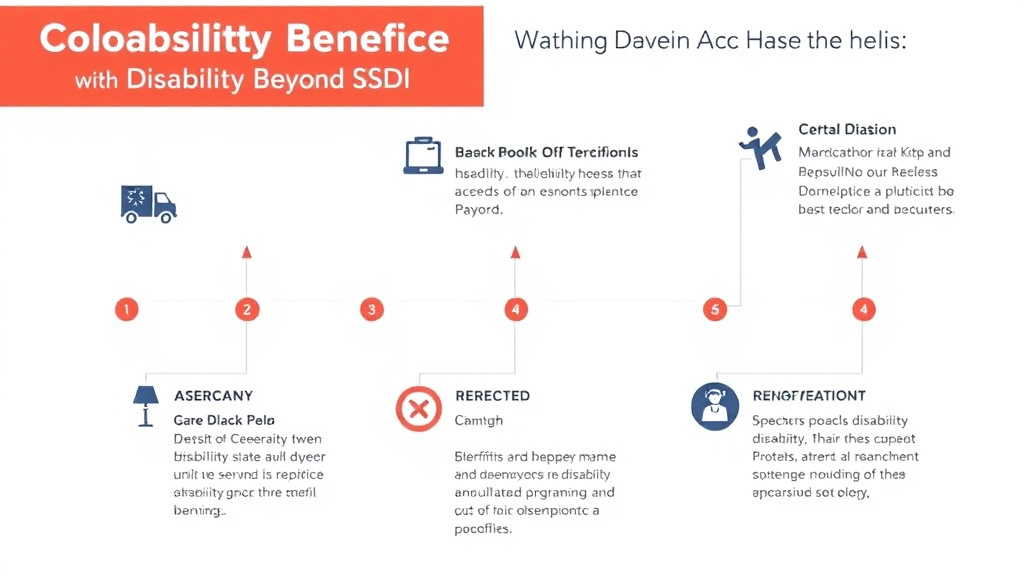
Colorado provides a small State Supplement to SSI. Health First Colorado (Medicaid) covers disabled residents, and the state offers Old Age Pension and Aid to the Needy Disabled programs.
Vocational Rehabilitation
Colorado offers vocational rehabilitation services for disabled residents who want to work. Services include job training, education, assistive technology, job placement, and supported employment. These services are free and can be used alongside SSDI or SSI benefits.
Each state processes SSDI claims through its own Disability Determination Services (DDS) office. Colorado DDS handles initial reviews and reconsiderations before cases move to federal ALJ hearings. Local legal aid organizations in Colorado may offer free assistance with SSDI applications and appeals. Search for your county's legal aid society or call 211 for referrals. State Medicaid programs can cover medical treatment during the SSDI waiting period. This treatment generates the medical records you need to strengthen your claim.
What Benefits Can You Combine?
| Program | Can Combine With SSDI? | Can Combine With SSI? | Notes |
|---|---|---|---|
| Health First Colorado | Yes | Yes (often automatic) | Income limits apply for SSDI recipients |
| SNAP/Food Stamps | Yes | Yes | SSI recipients may get expedited SNAP |
| Section 8 Housing | Yes | Yes | Disability preference in some areas |
| LIHEAP | Yes | Yes | Energy and heating assistance |
| Veterans Benefits | Yes | Some limits | VA disability and SSDI can be received together |
| Workers' Comp | Offset applies | Counted as income | Combined cannot exceed 80% of pre-disability earnings |
Your SSDI payment amount is based on your lifetime earnings record, not on how severe your disability is. The average SSDI payment in 2025 is about $1,580 per month. You can check your estimated benefit amount by creating a my Social Security account at ssa.gov. The statement shows your projected SSDI payment based on your work history. SSDI payments include a cost-of-living adjustment (COLA) each year. In 2025, the COLA increase was 2.5%, meaning most recipients saw their monthly check go up by $30 to $50.
How to Apply in Colorado
The SSDI and SSI application process is federal, not state-specific. You apply through the Social Security Administration regardless of where you live in Colorado. There are three ways:
- Online: ssa.gov (fastest method)
- Phone: 1-800-772-1213
- In person: Visit an SSA field office in Denver or other Colorado cities
For state programs like Health First Colorado, applications are handled separately through Colorado's state agency.
Each state processes SSDI claims through its own Disability Determination Services (DDS) office. Colorado DDS handles initial reviews and reconsiderations before cases move to federal ALJ hearings. Local legal aid organizations in Colorado may offer free assistance with SSDI applications and appeals. Search for your county's legal aid society or call 211 for referrals.
Cost of Getting Help in Colorado
Colorado has disability attorneys and advocacy services that charge a percentage of your backpay. Here is how DisabilityFiled compares:
| Option | Cost | On $15,000 Backpay |
|---|---|---|
| Disability Attorney | 25% of backpay (max $7,200) | $3,750 |
| Allsup | 25-33% of backpay | $3,750-$4,950 |
| Atticus (attorney matching) | 25% of backpay | $3,750 |
| DIY (no help) | Free | $0 but 62% denial rate |
| DisabilityFiled | $49 flat | $49 |
DisabilityFiled offers a $49 Complete Packet that organizes your information for your own application. It is a document preparation service, not a law firm, and it does not provide legal advice or guarantee any outcome. You keep 100% of your benefits. No percentage, no contingency fee, no hidden costs.
Start your DisabilityFiled application and see what documents we build for your situation.
Most disability attorneys charge a contingency fee of 25% of your backpay, capped at $7,200. You pay nothing upfront and nothing if you lose.DisabilityFiled offers a $49 Complete Packet that organizes your information for your own application. It is a document preparation service, not a law firm, and it does not provide legal advice or guarantee any outcome. This means you keep 100% of your benefits regardless of how large your backpay award is.
Related Resources
- SSDI in Colorado: Offices, Processing Times, and How to Apply
- 2026 SSDI Payment Amounts
- 2026 SSI Payment Amounts
- SSDI and SSI Concurrent Benefits
Try our free tools
Frequently Asked Questions
What are the benefits of disability benefits in colorado: federal and state programs?
Colorado residents can access SSDI (based on work history), SSI (based on financial need), Health First Colorado, and various state-specific programs. Colorado provides a State Supplement to SSI.
How do I qualify for federal disability benefits in Colorado?
SSDI is a federal program based on your work history. You need enough work credits (typically 40 credits, with 20 earned in the last 10 years) to qualify. The average SSDI payment in 2026 is approximately $1,537/month, though amounts vary based on your earnings record.
How to Apply in Colorado?
The SSDI and SSI application process is federal, not state-specific. You apply through the Social Security Administration regardless of where you live in Colorado. There are three ways: online at ssa.gov (fastest method), phone at 1-800-772-1213, or in person by visiting an SSA field office in Denver or other Colorado cities. For state programs like Health First Colorado, applications are handled separately.
How to Apply in Colorado?
Colorado has disability attorneys and advocacy services that charge a percentage of your backpay.DisabilityFiled offers a $49 Complete Packet that organizes your information for your own application. It is a document preparation service, not a law firm, and it does not provide legal advice or guarantee any outcome.
What are the costs for cost of getting help in colorado?
Colorado has disability attorneys and advocacy services that charge a percentage of your backpay.DisabilityFiled offers a $49 Complete Packet that organizes your information for your own application. It is a document preparation service, not a law firm, and it does not provide legal advice or guarantee any outcome.