Last updated 2026-07-10
TL;DR
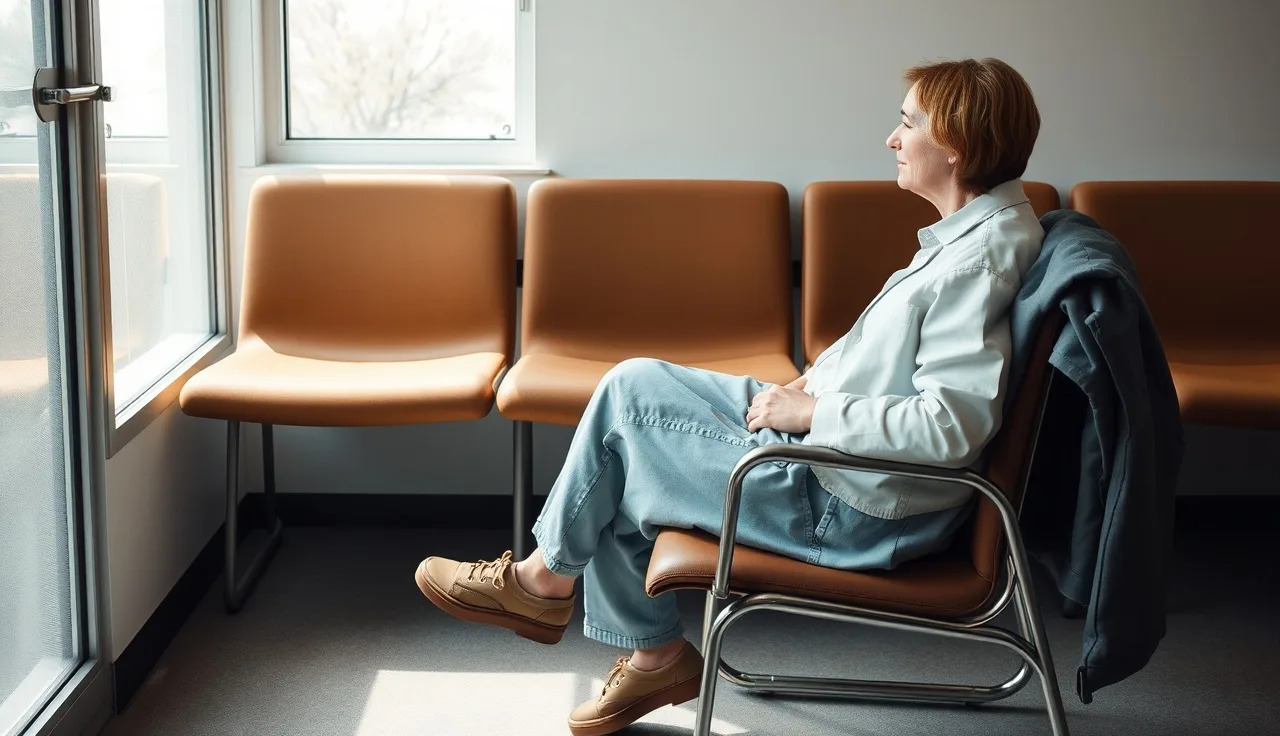
Wear what you actually wear on a moderately bad day. Comfortable, practical clothes that show your real limits. Don't dress up to impress the examiner, and don't dress down to perform suffering. The doctor watches how you move and function, not your outfit. Bring every assistive device you use. Your one job is an honest picture of your condition.
Why does what you wear to a consultative exam matter at all?
The consultative exam, called a CE, is a medical appointment SSA arranges and pays for when your own records are thin or when the agency wants an independent opinion about your condition [1]. The doctor or psychologist doing it is not your treating physician. They usually see you once, for 15 to 45 minutes, then write a report that goes straight into your file.
That report helps a Disability Determination Services examiner decide whether you can work. Every observable detail in that room feeds the decision, including how you carry yourself physically.
None of this means you should perform. It means the exam is a snapshot of your functional capacity, and your clothing is part of the frame. Show up in a full suit after telling SSA you can't dress yourself without help, and that contradiction gets noted. Show up in clothes that are visibly too hard for someone with your limits to put on, and you've created the same problem in reverse.
The examiner is trained to watch. They notice how you walk in, how you lower yourself into a chair, how long you can sit still, whether you wince when you move, and whether your reported limits match what's in front of them. Your clothing either supports that observation or fights it.
What should you actually wear to the consultative exam?
Wear what you genuinely wear on a moderately bad day. Not your worst day, not a good day. The functional middle of your real life.
Practical clothing that reflects your real limits is the whole point. Severe arthritis in your hands and you normally wear slip-on shoes because laces are impossible? Wear the slip-ons. Back brace every day? Wear it. Condition that runs you hot or cold, and you dress for it at home? Dress that way here.
Some specifics that work for most people:
- Loose pants or shorts that let the examiner see leg mobility if needed
- A simple shirt or top you can get on and off without contorting yourself
- Shoes you can actually remove during the exam without a struggle, since many CEs ask you to take off footwear
- Any assistive device you routinely use: cane, walker, brace, compression garment. Don't leave them home to look more capable.
Upper-body condition? Skip tight shirts and fiddly fastenings. Neurological condition? Wear layers you can handle on your own. You're not trying to make your condition look worse. You're just refusing to hide what's real.
One practical note. SSA's Program Operations Manual System (POMS) tells CE providers to report on the claimant's appearance and behavior as part of their findings [2]. That includes how you present yourself. It's part of the clinical picture, not a superficial judgment.
What clothing should you avoid at the consultative exam?
Avoid anything that misrepresents your function in either direction.
The most common mistake is overdressing. People want to make a good impression, which is human and completely counterproductive. Formal business attire, after you've reported that you can't stand more than 10 minutes or drive or leave the house without help, creates an inconsistency the examiner will flag. The report may say the claimant appeared well-groomed and appropriately dressed with no obvious distress. Sounds neutral. Reads as evidence against a claim for severe limits.
The opposite mistake is theatrical underdressing. Deliberately dirty, torn, or distressed clothing meant to signal suffering. That looks like a performance and it damages credibility. Examiners have seen it for years and they recognize it fast.
Specific things to avoid:
- High heels or formal shoes if you normally can't wear them
- Heavy makeup or careful grooming that contradicts reported fatigue or self-care limits
- Clothing that takes real finger dexterity to put on if you've reported fine motor problems
- Tight waistbands or constricting fits if you have abdominal, back, or respiratory conditions, since the discomfort changes how you sit and move and can distort the exam
Skip new or borrowed clothing you're not used to. If you're tugging at an unfamiliar collar or adjusting something every 30 seconds, that's a distraction and a possible inconsistency with your reported symptoms.
Should you bring or wear any medical devices to the exam?
Yes. Bring every assistive device you use in daily life, every time.
Prescribed cane? Bring it, even if you can limp along without it on a good day. The question is what you need regularly, not what you can gut out at your peak. Same rule for walkers, wheelchairs, hearing aids, CPAP machines if they're relevant to the evaluation, orthotic inserts, back braces, knee braces, wrist splints, and anything else that's part of your ordinary function.
Leaving these home to look more capable is one of the most self-defeating things applicants do. SSA's regulations at 20 CFR 404.1519n require CE providers to describe your ability to use assistive devices [3]. Show up without the one you normally use, and the examiner has nothing to document. The record goes in with no evidence that you need it.
Wear compression stockings if you wear them daily. Wear your wrist brace if it's prescribed and part of your routine. The CE is not a test of what you can do stripped of your tools. It's documentation of your actual capacity, including the accommodations you lean on to get through a day.
Does your appearance at the exam affect your SSDI claim?
It can, in specific and documented ways.
CE providers are required under SSA guidelines to observe and report how you present, including general appearance, behavior, and ability to function during the visit [2]. This isn't casual or off the record. It goes into the written CE report, which becomes part of your medical file, which the Disability Determination Services examiner weighs when making the initial decision.
Those appearance and behavior observations can:
- Support your claim when they line up with your reported symptoms
- Create credibility problems when they contradict your application's functional limits
- Show up in a denial as evidence that your self-reported symptoms don't fully match clinical observation
SSA runs claims through a five-step sequential evaluation [4]. At steps four and five, the agency assesses your Residual Functional Capacity (RFC), meaning what you can still do despite your limits. The CE report feeds that RFC directly. Inconsistencies in how you present at the CE, appearance included, can lower your RFC in ways that push you toward a denial.
This isn't meant to scare you. Most people who present honestly and consistently have no trouble here. The risk shows up when someone, on purpose or by accident, dresses in a way that misrepresents how they really function day to day.
What should you expect the examiner to observe beyond your clothing?
The examiner starts building a functional picture the second you walk in. Clothing is one piece of a much bigger set of observations.
They'll usually note:
- How you walked in and whether your gait matches your reported condition
- How you sat down and whether you showed pain behaviors
- How long you sat without shifting or asking to stand
- Your hand function during paperwork or physical tests
- Your speech, memory, and affect if the CE covers psychological or cognitive ground
- Whether your reported symptoms match your observable behavior across the whole visit
For mental health CEs, common for anxiety, depression, PTSD, and cognitive disorders, the examiner also notes grooming as part of the mental status exam. The Diagnostic and Statistical Manual of Mental Disorders lists changes in self-care and grooming among the clinical indicators for several conditions [5]. So if your mental health condition genuinely wrecks your ability to care for yourself, your natural presentation, clothing and all, is clinical data. It's evidence, not a liability.
The takeaway is short. Be yourself, be honest, and stop trying to manage what the examiner thinks. The exam is brief and the examiner is experienced. Present your real functional state and let the evidence carry it.
How should you prepare the day of the consultative exam?
Lay out your clothes the night before so you're not rushing a bad body through a stressful morning. Use the exact level of help you use every day to get dressed. If someone normally helps you, let them help you. If dressing takes you 30 minutes because of pain or fatigue, build that into your timeline.
Arrive a few minutes early. Bring all your medications in their original bottles. Bring a list of your treating physicians and their contact info, since the CE provider may ask. If a support person usually goes with you to appointments, bring them, and mention whether you typically need someone along. That's functional data too.
During the exam, don't exaggerate and don't minimize. If a movement causes pain, say so in the moment, not afterward. If you can only sit a few minutes before you have to shift, shift and explain. The examiner is documenting what they see.
If you're using a disability claim tool to organize your documentation before the exam, that's preparation that pays off. Knowing what's in your file, which conditions are documented, and what your treating physicians have said gives you a clearer read on what the CE is trying to clarify. DisabilityFiled's guided intake process helps you pull that picture together before appointments like this one, so you walk in knowing where your records stand.
After the exam, write down everything while it's fresh. What you were asked, what tests were done, how long it ran, whether anything felt off. You can request a copy of the CE report once it's in your file, and you should [6].
What if your condition makes it hard to dress or travel to the exam?
SSA has to make the consultative exam accessible. If your condition keeps you from traveling to the CE location, you can request an in-home examination or ask SSA to schedule the exam closer to you [1].
If dressing yourself is genuinely impossible because of your condition, that's relevant clinical information. Document it. Ask your treating physician to put a statement about your self-care limits in your file. Arriving at a CE with help from a caregiver, wearing adaptive clothing, or needing assistance to undress for the physical exam are all things the examiner can observe and write down.
For applicants with severe physical limits, the exam itself is sometimes the best demonstration of what you can't do. The examiner sees your real capacity in real time. That's exactly why you shouldn't push through and mask symptoms during the visit. In pain? Say so. Can't complete a requested movement? Say you can't. Attempting and failing is more useful to the record than flat refusing, but never attempt anything that could actually injure you.
SSA's regulations at 20 CFR 404.1518 cover what happens if you skip a CE or refuse to cooperate without good cause [7]. If your condition legitimately blocks attendance or requires accommodations, talk to SSA before the exam, not after. Get the accommodations in writing when you can.
Can what you wear hurt your claim even if the exam goes well otherwise?
Short answer: probably not on its own, but it can pile onto other credibility problems.
SSA adjudicators are hunting for consistency across your entire record. Your application, your medical records, your function reports, and your CE observations all get lined up and compared. One exam where you looked more functional than expected won't sink a claim by itself. But if your CE appearance is the third or fourth inconsistency in the file, it feeds a pattern the adjudicator can use to question everything you've reported.
SSA's rules for evaluating symptoms at 20 CFR 404.1529 let adjudicators weigh whether your reported symptoms are consistent with the overall evidence in your record [8]. How you presented at the CE is part of that evidence.
The realistic risk is small for someone who presents honestly and consistently. It climbs for someone who pours effort into managing how they look, because inconsistencies tend to surface in exactly that situation.
Dress like you live. That's the only strategy that holds up.
What do the SSA rules say about what the CE examiner must evaluate?
SSA's regulations at 20 CFR 404.1519n spell out what a complete CE report has to include [3]. The list is specific and worth knowing:
- Your chief complaint
- A detailed description of your history, clinical findings, and diagnostic test results
- A diagnosis
- A statement of what you can still do despite your impairment
- An assessment of how long the condition has existed and whether it's expected to improve
For physical exams, the regulations require the provider to describe your range of motion, strength, sensory function, and coordination in enough detail to judge your ability to do work tasks like sitting, standing, walking, lifting, and handling objects.
For mental exams, the report has to include a formal mental status examination covering orientation, memory, concentration, mood, affect, and insight.
Nothing in these regulations says the examiner grades your clothing. But the general appearance and behavioral observations section is a standard clinical component that most providers include, because SSA's POMS instructs them to give a complete clinical picture [2]. That picture includes presenting appearance.
The Blue Book, SSA's official Listing of Impairments, sets the medical criteria for qualifying conditions [9]. Your CE findings get measured against those listings. The closer the CE report's clinical findings match a listing's specific criteria, the stronger your case.
How is the consultative exam changing under SSA's current policies?
SSA has been moving more medical reviews in-house instead of contracting them out to independent CE vendors. Under this shift, the examiner you see may be a Social Security Administration employee rather than a contract physician [10].
The effect on what you wear and how you present is minimal. The clinical standards for CE reports stay the same no matter who employs the examiner. What changes is the administrative path and, in some cases, the location or format of the exam.
If you're in the process now, this matters mostly for scheduling. SSA has hit backlogs arranging CEs while it transitions its evaluation model. A delayed CE can push back your initial decision, which is already one of the slower stretches of the application process.
Want the broader story on how SSA is reworking its medical review process? The article on social security is bringing all medical disability reviews in-house covers the policy background.
For now, the CE is still the CE. Present honestly, bring your devices, wear your normal clothes, and document everything afterward.
Quick reference: what to wear vs. what to avoid
Here's a direct comparison of clothing and presentation choices for the CE:
| Category | Wear/Bring | Avoid |
|---|---|---|
| Footwear | Shoes you actually wear daily; slip-ons if you can't tie laces | Dress shoes, heels, or any shoe inconsistent with your condition |
| Clothing fit | Loose, comfortable; easy to remove layers | Tight, constricting, or formal attire that misrepresents function |
| Assistive devices | All prescribed devices you use regularly | Leaving them home to appear more capable |
| Grooming | Your honest daily baseline | Extensive grooming that contradicts reported self-care limits |
| Adaptive clothing | Velcro closures, elastic waists if that's what you use | Complicated fasteners you don't actually manage on your own |
| Support person | Bring them if you normally rely on one | Leaving them home to appear more independent |
| Medications | Original bottles, all current medications | Leaving medications home |
The pattern is simple. Bring your real life into that exam room. Not your best day, not a staged worst day. Your honest functional reality.
Not sure what your current records show, or whether your functional limits are well-documented heading into a CE? Getting a clear read on your file before the appointment matters. That's the kind of pre-appointment clarity that DisabilityFiled's guided intake is built to give you.
Frequently asked questions
Will the consultative exam doctor report what I was wearing to SSA?
Likely yes, as a general description. SSA's POMS instructs CE providers to describe the claimant's general appearance and presenting behavior in their report. That usually covers whether you appeared appropriately dressed, your grooming, and any obvious functional observations. It's not a fashion critique. It's clinical context that goes into the written record SSA uses to assess your Residual Functional Capacity.
Should I wear my back brace or compression garment to the CE?
Yes, absolutely. Wear every assistive or adaptive device you use in daily life. Under 20 CFR 404.1519n, CE providers are required to document your use of assistive devices. Leave your brace home and that evidence simply doesn't exist in the exam record. Your goal is an accurate picture of your functional capacity, accommodations included, not a demonstration of how well you can perform without them.
I have a mental health condition. Does my appearance matter more or less?
It matters differently. Mental status examinations, the standard format for psychiatric CEs, formally assess appearance, grooming, and self-care as clinical indicators. Conditions like depression and schizophrenia list impaired self-care among their diagnostic criteria. Your honest, natural presentation is clinical data. Don't mask a poor self-care day with effort you don't normally make, and don't manufacture distress that isn't there.
Can I wear pajamas or casual home clothes to the exam?
If that's genuinely what you wear every day because of your condition, yes. People with severe fatigue, chronic pain, or certain neurological disorders sometimes can't tolerate conventional clothing. If that's your real daily experience, present it honestly. If pajamas are your pick because you're nervous, and that's not your daily reality, wear your actual typical clothing instead. Authenticity is the standard.
What if I need help getting dressed in the morning? Should I note that on my application?
Yes, and it belongs in your function report. If you need help dressing, document it in your Adult Function Report and ask your treating physician to note it in your records. Arriving at the CE with a caregiver who assisted you is consistent with that claim. Arriving independently and looking fully self-sufficient after reporting dressing assistance as a limitation creates an inconsistency.
How long does a consultative exam usually take?
Most physical CEs run 15 to 45 minutes. Psychiatric or psychological CEs can run longer, sometimes 60 to 90 minutes, especially with intelligence or cognitive testing. The short duration is exactly why presentation matters. The examiner is drawing conclusions about your long-term functional capacity from a brief snapshot, so everything observable in that window feeds the report.
Can I request a copy of the consultative exam report?
Yes. You have the right to obtain all evidence in your Social Security file, including the CE report, under 20 CFR 404.1512. Request your file from your local SSA office or through your my Social Security online account. Read the CE report carefully. If the examiner's findings contradict your treating physician's records or contain factual errors, you can address that discrepancy in a reconsideration or appeal.
What if the consultative exam doctor seems dismissive or rushed?
CE appointments are often short and not always warm. Stay calm, answer accurately, and don't embellish. If you're asked to do something physical you can't do without pain, say so and stop. If the examiner is moving too fast or missing something, you can say 'I also want you to know' and add the detail. After the exam, write down exactly what happened and what was and wasn't assessed.
Should I tell the CE doctor about all my conditions, even ones not on my application?
Yes. SSA considers all medically determinable impairments, not only the ones you first listed. If you have a secondary condition that limits your function and haven't mentioned it, bring it up so the CE report can document it. You can also ask your local office to add conditions to your claim. Leaving out relevant conditions is a missed chance to build a complete functional picture.
Will I fail my consultative exam if I appear too healthy?
There's no literal pass or fail, but appearing much more functional than your records indicate creates credibility problems. SSA evaluates whether your reported symptoms are consistent with the overall evidence under 20 CFR 404.1529. If your CE presentation is dramatically out of step with your function reports and medical records, the adjudicator can discount your reported limits. Consistency across your whole record matters more than any single visit.
Do I need to dress differently for a psychological CE versus a physical one?
The same principle covers both: wear your honest daily presentation. For a psychological CE, grooming and self-care are specifically part of the mental status exam, so your natural baseline is genuinely informative. For a physical CE, functional clothing that doesn't block range-of-motion testing is the practical move. In both cases, authenticity beats strategy.
What if I can't afford clean or good-condition clothing for the exam?
Don't worry about it. SSA examiners evaluate functional capacity, not economic status. Clean clothes are generally better because heavily soiled clothing can distract from clinical observations, but if your situation makes that hard, it won't disqualify you. What matters is that your presentation honestly reflects your daily functional reality, whatever that looks like. SSA's regulations set no dress code for CE attendance.
Can my SSDI claim be denied because of how I looked at the consultative exam?
Not for appearance alone. But if your CE presentation is one of several inconsistencies in your record, it can contribute to a denial under SSA's credibility rules at 20 CFR 404.1529. The best protection is honest, consistent presentation across your entire application. If your claim is denied, you have appeal rights: reconsideration, an ALJ hearing, the Appeals Council, and federal court review.
Sources
- SSA.gov, Program Operations Manual System (POMS) DI 22510.001 - Consultative Examinations: SSA arranges and pays for consultative exams when existing medical evidence is insufficient or an independent evaluation is needed.
- SSA.gov, Program Operations Manual System (POMS) DI 22510.006 - Content of CE Reports: CE providers are instructed to provide a complete clinical picture including the claimant's general appearance and behavior during the examination.
- Social Security Administration, 20 CFR 404.1519n - Informing the examining source of examination scheduling, report content, and signature requirements: CE report requirements include clinical findings, diagnosis, functional statement, and assessment of the claimant's ability to use assistive devices.
- SSA.gov, How We Decide If You Are Disabled - Five-Step Sequential Evaluation: SSA uses a five-step sequential evaluation process; steps four and five assess Residual Functional Capacity using CE findings.
- American Psychiatric Association, Diagnostic and Statistical Manual of Mental Disorders (DSM-5-TR): Mental status exam criteria for several conditions, including depression and schizophrenia, include impaired self-care and grooming as clinical indicators.
- SSA.gov, Your Right to Representation and Your File: Claimants have the right to request and review their complete Social Security disability file, including consultative exam reports.
- Social Security Administration, 20 CFR 404.1518 - Consequences of failing to attend a consultative examination: SSA may deny or suspend a claim if a claimant fails to attend a CE without good cause; accommodations should be requested before the exam.
- Social Security Administration, 20 CFR 404.1529 - How we evaluate symptoms, including pain: Adjudicators may consider whether a claimant's reported symptoms are consistent with the overall evidence in the record, including CE observations.
- SSA.gov, Disability Evaluation Under Social Security (Blue Book): SSA's Listing of Impairments sets specific medical criteria for qualifying conditions; CE findings are compared against these listings.
- SSA.gov, Disability Benefits Policy and Program Information: SSA has announced a shift toward in-house medical reviews, moving away from independent CE vendor contracts.
- Social Security Administration, 20 CFR 404.1512 - Responsibility for evidence: Claimants have the right to obtain all evidence in their Social Security file under 20 CFR 404.1512.
- SSA.gov, Forms - Adult Function Report: SSA's Adult Function Report asks about activities of daily living including dressing, and discrepancies with CE presentation can affect credibility assessments.