Deemed Filing: When the SSA Automatically Files for Both SSDI and SSI
TL;DR: When you apply for one disability program, the SSA may automatically consider you for the other under "deemed filing" rules. If you apply for SSDI and might qualify for SSI (low income/assets), the SSA should evaluate both. If you apply for SSI and have work credits, they should check SSDI eligibility. Don't rely on deemed filing alone. Explicitly request evaluation for both programs to ensure nothing falls through the cracks.

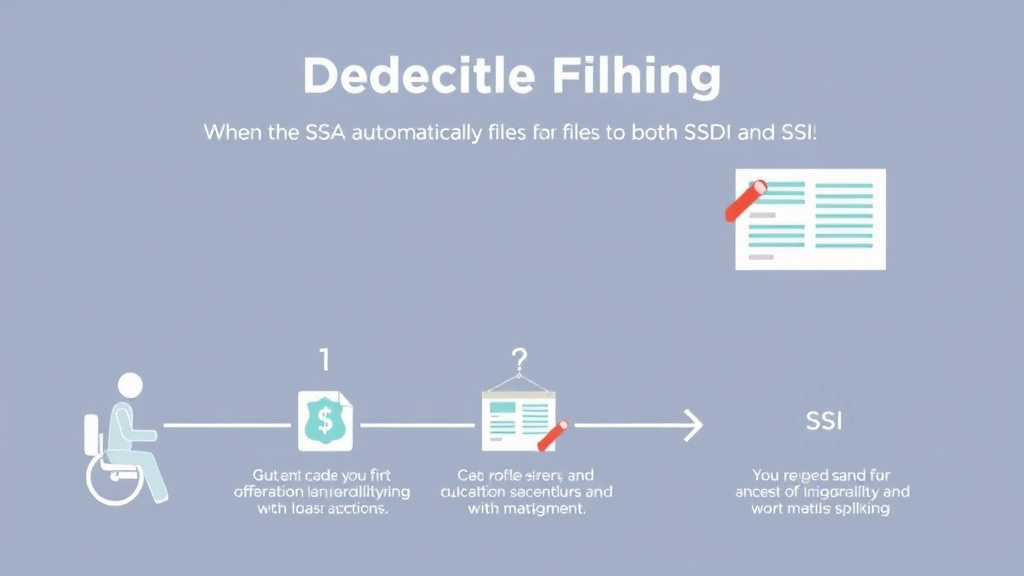
Deemed filing is the SSA's policy of automatically considering you for both SSDI and SSI when you apply for one, if there's any possibility you could qualify for the other. It's meant to help applicants get all benefits they're entitled to, but it doesn't always work perfectly.
The SSDI application process takes an average of 3 to 6 months for an initial decision. If denied, the appeals process can add another 12 to 24 months depending on your region. Having complete and detailed medical documentation is the single biggest factor in SSDI approval. Request records from all treating providers before submitting your application. Many claimants benefit from organizing their medical history into a timeline showing how their condition has progressed. This helps SSA reviewers see the full picture without searching through hundreds of pages.
When Deemed Filing Applies
- You file for SSDI and your potential payment is low enough that you might also qualify for SSI
- You file for SSI and you have some work history that might give you SSDI eligibility
The SSDI application process takes an average of 3 to 6 months for an initial decision. If denied, the appeals process can add another 12 to 24 months depending on your region. Having complete and detailed medical documentation is the single biggest factor in SSDI approval. Request records from all treating providers before submitting your application. Many claimants benefit from organizing their medical history into a timeline showing how their condition has progressed. This helps SSA reviewers see the full picture without searching through hundreds of pages.
Why You Shouldn't Rely on It
Deemed filing is supposed to be automatic, but applications sometimes fall through the cracks. Explicitly tell the SSA you want both programs evaluated. Ask the field office representative or note it in your application. Confirm during follow-up calls.
The SSDI application process takes an average of 3 to 6 months for an initial decision. If denied, the appeals process can add another 12 to 24 months depending on your region. Having complete and detailed medical documentation is the single biggest factor in SSDI approval. Request records from all treating providers before submitting your application. Many claimants benefit from organizing their medical history into a timeline showing how their condition has progressed. This helps SSA reviewers see the full picture without searching through hundreds of pages.
Benefits of Dual Filing
- SSI can provide immediate Medicaid while waiting for SSDI's 24-month Medicare
- SSI can "top up" low SSDI payments to the SSI federal rate
- Filing for both ensures you're covered regardless of which program approves you
Start your application with DisabilityFiled
Related Articles
Your SSDI payment amount is based on your lifetime earnings record, not on how severe your disability is. The average SSDI payment in 2025 is about $1,580 per month. You can check your estimated benefit amount by creating a my Social Security account at ssa.gov. The statement shows your projected SSDI payment based on your work history. SSDI payments include a cost-of-living adjustment (COLA) each year. In 2025, the COLA increase was 2.5%, meaning most recipients saw their monthly check go up by $30 to $50.
What to Do Next
- Log into your my Social Security account to verify your current benefit amount and payment schedule.
- Contact your local SSA office to ask how any other benefits you receive interact with your SSDI payment. Get the answer in writing if possible.
- Review your most recent SSA award letter for any conditions or reporting requirements attached to your benefits.
- Set up direct deposit if you have not already. SSA strongly recommends electronic payments, and they arrive faster than paper checks.
Understanding the Details
If you receive both SSDI and another type of benefit, report any changes in either benefit to SSA within 10 days. This includes starting or stopping other benefits, changes in payment amounts, or returning to work. SSA uses this information to calculate your correct payment amount. Failing to report can lead to overpayments that SSA will recoup by withholding future SSDI payments.
Understanding how different benefits interact with SSDI prevents surprises that can affect your financial stability. Some programs reduce your SSDI payment through offsets, while others have no effect on your disability benefits. Workers' compensation is the most common program that triggers an offset. SSA calculates the combined amount of your SSDI and workers' comp, and if it exceeds 80% of your pre-disability earnings, SSA reduces your SSDI payment to bring the total under that threshold.
Medicare coverage begins 24 months after your SSDI entitlement date, not 24 months after you receive your first payment. Many claimants are confused by this timeline. During the waiting period, you may qualify for Medicaid through your state, or you can purchase coverage through the Health Insurance Marketplace. Some states have expanded Medicaid programs that cover individuals during the SSDI waiting period.
SSI (Supplemental Security Income) has stricter rules about other income and resources than SSDI does. SSI recipients cannot have more than $2,000 in countable resources ($3,000 for a couple). Lump-sum payments from other programs, retroactive benefits, or settlements can push you over this limit. If you receive a lump sum, you may need to spend it down within a specific timeframe or set up a special needs trust to protect your SSI eligibility.
Try our free tools