Extended Period of Eligibility After SSDI Trial Work
TL;DR: The Extended Period of Eligibility (EPE) is the 36-month period after your Trial Work Period ends. During the EPE, you receive SSDI payments for any month your earnings are below SGA ($1,620/month in 2026) and lose payment for months above SGA. Benefits can turn on and off without a new application. After the EPE, the first month above SGA triggers benefit termination. You may then use Expedited Reinstatement within 5 years.

The EPE is your safety net after the Trial Work Period. It gives you 36 months to test sustained employment with the assurance that your benefits will resume if work doesn't pan out.
In 2025, SGA is defined as earning more than $1,620 per month (or $2,700 if you are blind). Earning above this amount generally means SSA considers you able to work. The Trial Work Period lets you test your ability to work for 9 months without losing benefits. During this period, you receive full SSDI payments regardless of how much you earn. If you want to try working but are afraid of losing benefits, look into the Ticket to Work program. It provides employment support services at no cost and includes built-in safety nets.
How the EPE Works
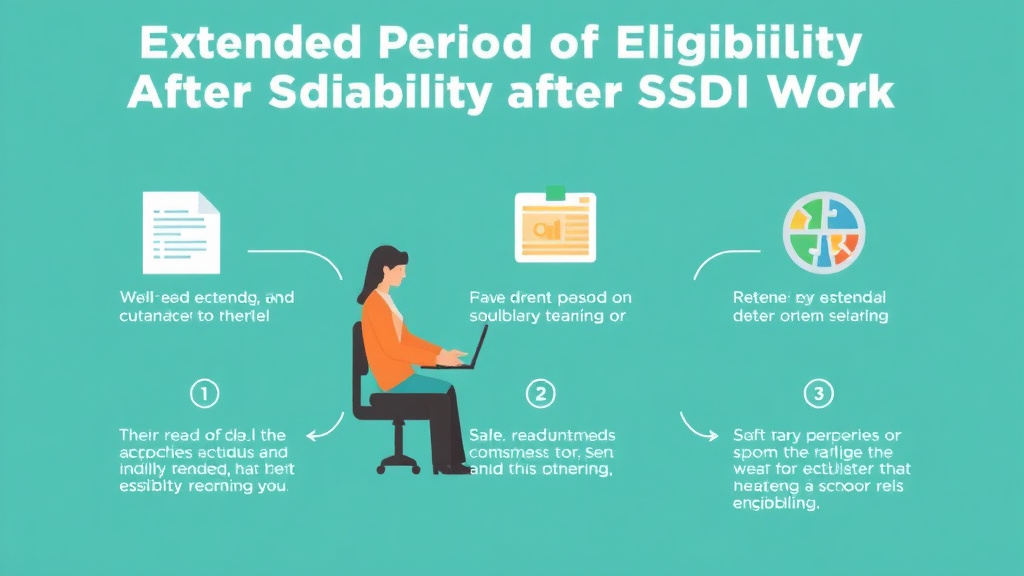
The first month after your 9th trial work month begins the EPE. For the next 36 months:
- Earnings below SGA in a month = full SSDI payment for that month
- Earnings above SGA in a month = no SSDI payment for that month
- No new application needed to turn payments back on
In 2025, SGA is defined as earning more than $1,620 per month (or $2,700 if you are blind). Earning above this amount generally means SSA considers you able to work. The Trial Work Period lets you test your ability to work for 9 months without losing benefits. During this period, you receive full SSDI payments regardless of how much you earn. If you want to try working but are afraid of losing benefits, look into the Ticket to Work program. It provides employment support services at no cost and includes built-in safety nets.
The Grace Period
The first month after the TWP where your earnings exceed SGA is called the "cessation month." You receive your SSDI payment for the cessation month and the two following months (the 3-month grace period), even if you're earning above SGA.
The SSDI application process takes an average of 3 to 6 months for an initial decision. If denied, the appeals process can add another 12 to 24 months depending on your region. Having complete and detailed medical documentation is the single biggest factor in SSDI approval. Request records from all treating providers before submitting your application. Many claimants benefit from organizing their medical history into a timeline showing how their condition has progressed. This helps SSA reviewers see the full picture without searching through hundreds of pages.
After the EPE
Once the 36-month EPE ends, any month you earn above SGA triggers permanent benefit termination. However, if you stop working within 5 years, you can use Expedited Reinstatement to restart benefits without a new application.
Start your application with DisabilityFiled
Related Articles
The SSDI application process takes an average of 3 to 6 months for an initial decision. If denied, the appeals process can add another 12 to 24 months depending on your region. Having complete and detailed medical documentation is the single biggest factor in SSDI approval. Request records from all treating providers before submitting your application. Many claimants benefit from organizing their medical history into a timeline showing how their condition has progressed. This helps SSA reviewers see the full picture without searching through hundreds of pages.
What to Do Next
- Check the current SGA threshold at ssa.gov before accepting any work. Earning above this limit can trigger a review of your disability status.
- Contact your local Ticket to Work program to explore supported employment options that include benefit protections.
- Report any work activity to SSA within 10 days of starting. Unreported work, even below SGA, can create problems later.
- Keep detailed records of any work accommodations you need. These records support your continued eligibility if SSA reviews your case.
Understanding the Details
SSA offers several work incentive programs designed to help SSDI recipients test their ability to work without immediately losing benefits. The Trial Work Period lets you work for 9 months (not necessarily consecutive) while receiving full SSDI benefits, regardless of how much you earn. After the trial work period, you enter a 36-month Extended Period of Eligibility where your benefits are suspended for months you earn above SGA but can be reinstated if your earnings drop below SGA.
Self-employment while on SSDI follows different rules than traditional employment. SSA evaluates self-employment using three tests: significant services, substantial income, and comparability. If your net earnings exceed SGA and you provide significant services to the business, SSA may find you are engaging in substantial gainful activity. Tracking your hours and business activities carefully helps you stay on the right side of the rules.
The Ticket to Work program is a free, voluntary program that provides employment support services to SSDI recipients. When you assign your Ticket to an Employment Network (EN) or state vocational rehabilitation agency, you receive job placement help, career counseling, and training. While your Ticket is in use and you are making timely progress, SSA will not conduct a Continuing Disability Review, which provides additional protection against losing benefits.
The SGA (Substantial Gainful Activity) threshold determines whether SSA considers you able to work. In 2025, the SGA limit is $1,620 per month for non-blind individuals and $2,700 per month for blind individuals. If you earn above SGA, SSA generally considers you not disabled. However, certain expenses related to your disability (called Impairment-Related Work Expenses) can be deducted from your earnings before SSA compares them to the SGA limit.
Try our free tools
Frequently Asked Questions
What are the requirements for extended period of eligibility after ssdi trial work?
The Extended Period of Eligibility (EPE) is the 36-month period after your Trial Work Period ends. During the EPE, you receive SSDI payments for any month your earnings are below SGA ($1,620/month in 2026) and lose payment for months above SGA. Benefits can turn on and off without a new application. After the EPE, the first month above SGA triggers benefit termination. You may then use Expedited Reinstatement to restart benefits without a new application.
How the EPE Works?
The first month after your 9th trial work month begins the EPE. For the next 36 months: Earnings below SGA in a month = full SSDI payment for that month, Earnings above SGA in a month = no SSDI payment for that month, No new application needed to turn payments back on. In 2025, SGA is defined as earning more than $1,620 per month (or $2,700 if you are blind). Earning above this amount generally means you are no longer considered disabled.
How long does the Extended Period of Eligibility (EPE) last?
The Extended Period of Eligibility (EPE) lasts for 36 months after the Trial Work Period (TWP) ends. During this time, you can work and earn above the Substantial Gainful Activity (SGA) level without losing your SSDI benefits.
What happens after the Extended Period of Eligibility (EPE) ends?
Once the 36-month EPE ends, any month you earn above SGA triggers permanent benefit termination. However, if you stop working within 5 years, you can use Expedited Reinstatement to restart benefits without a new application.