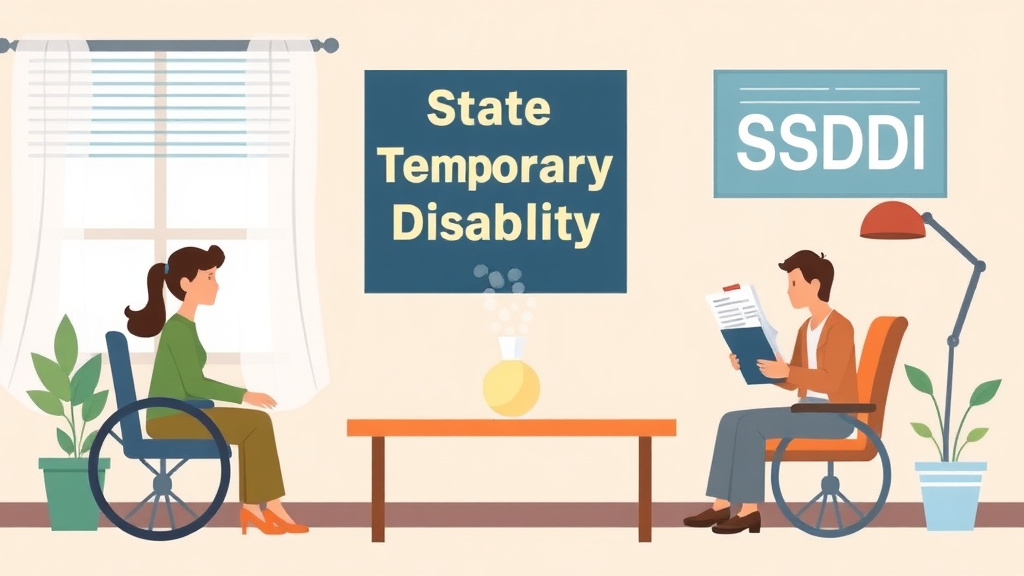
State Temporary Disability vs SSDI
TL;DR: Six states (California, New Jersey, New York, Hawaii, Rhode Island, Washington) and Puerto Rico offer state temporary disability insurance (TDI) programs. These provide short-term benefits (typically 26-52 weeks) for workers who can't work due to non-work-related illness or injury. TDI is not SSDI. You can receive TDI while your SSDI application is pending. TDI has a lower bar (can't do your current job) and shorter duration than SSDI (can't do any job, long-term).
The SSDI application process takes an average of 3 to 6 months for an initial decision. If denied, the appeals process can add another 12 to 24 months depending on your region. Having complete and detailed medical documentation is the single biggest factor in SSDI approval. Request records from all treating providers before submitting your application. Many claimants benefit from organizing their medical history into a timeline showing how their condition has progressed. This helps SSA reviewers see the full picture without searching through hundreds of pages.
State TDI Programs
| State | Max Duration | Max Weekly Benefit (approx.) |
|---|---|---|
| California (SDI) | 52 weeks | $1,681 |
| New Jersey | 26 weeks | $1,025 |
| New York | 26 weeks | $170 |
| Hawaii | 26 weeks | $765 |
| Rhode Island | 30 weeks | $1,007 |
| Washington (PFML) | 12-16 weeks | $1,456 |
If you're in a TDI state, file for TDI immediately when you stop working. State TDI Programs is covered thoroughly below.
Using TDI as a Bridge to SSDI
If you're in a TDI state, file for TDI immediately when you stop working. File for SSDI simultaneously if you believe your condition will last 12+ months. TDI provides income during the months your SSDI application is pending.
Start your application with DisabilityFiled
Related Articles
The SSDI application process takes an average of 3 to 6 months for an initial decision. If denied, the appeals process can add another 12 to 24 months depending on your region. Having complete and detailed medical documentation is the single biggest factor in SSDI approval. Request records from all treating providers before submitting your application. Many claimants benefit from organizing their medical history into a timeline showing how their condition has progressed. This helps SSA reviewers see the full picture without searching through hundreds of pages.
Key Facts About the SSDI Process
Backpay (also called past-due benefits) covers the months between your first payable month and the month SSA approves your claim. If your case took 18 months to process and your onset date was established early in that timeline, you could receive more than a year of retroactive payments. SSA pays backpay in a lump sum, usually within 60 days of the approval decision.
Filing for SSDI requires patience and attention to detail. The average processing time for an initial application is 3 to 6 months. During this time, SSA reviews your work history, medical records, and functional limitations to determine whether you qualify. Having all your documents ready before you submit speeds up the process.
Consultative examinations (CEs) are medical exams that SSA pays for when your existing medical evidence is insufficient. A CE is typically brief, lasting 15 to 30 minutes. The examiner may not be a specialist in your condition. Because CEs are short and conducted by unfamiliar providers, they often understate your limitations. Strong records from your own treating doctors help counterbalance a weak CE report.
Representative payees manage SSDI benefits for individuals who cannot manage their own finances. SSA may appoint a representative payee if the beneficiary is a minor, has a severe mental impairment, or has demonstrated inability to handle financial matters. The payee is responsible for using the funds to meet the beneficiary's basic needs and must file an annual accounting with SSA.
What to Do Next
- Create a my Social Security account at ssa.gov if you do not have one yet. This gives you access to your earnings record, benefit estimates, and the ability to report changes online.
- Collect and organize all medical records related to your disabling conditions. Missing records are the most common reason for delays and denials.
- Write a detailed description of your daily routine, focusing on what you cannot do or what takes significantly longer than it used to. SSA uses this information to assess your functional capacity.
- DisabilityFiled offers a $49 Complete Packet that organizes your information for your own application. It is a document preparation service, not a law firm, and it does not provide legal advice or guarantee any outcome.com/start. Complete, SSA-compliant paperwork significantly increases your chances of approval.
Understanding the Details
The SSDI waiting period is 5 full calendar months from your established onset date. This means your first SSDI payment covers the sixth full month of disability. For example, if SSA determines your onset date is January 15, your first payable month is July, and you would receive your first payment in August. Backpay covers the months between your first payable month and the month your claim was approved.
Medical evidence is the foundation of every SSDI claim. SSA requires evidence from acceptable medical sources, which include licensed physicians, psychologists, optometrists, podiatrists, and qualified speech-language pathologists. Treatment notes, imaging results, lab work, and psychological testing all contribute to the evidence file. The more detailed and specific your medical records are, the easier it is for SSA to evaluate your claim.
The SSDI application process evaluates whether your medical condition prevents you from performing any type of work that exists in the national economy. SSA uses a five-step sequential evaluation process. First, they check whether you are currently working above the SGA limit. Then they assess whether your condition is severe. Next, they compare your condition to the Blue Book listings. If you do not meet a listing, they evaluate your residual functional capacity and determine whether you can do your past work or any other work.
Many claimants underestimate the importance of the function report (SSA Form 3373). This form asks you to describe your daily activities, social interactions, and physical/mental abilities in your own words. Be honest and specific. Instead of writing 'I can't do much,' describe exactly what you struggle with: 'I can wash dishes for about 5 minutes before my hands go numb and I have to stop. Loading the dishwasher requires bending, which causes sharp pain in my lower back.'
Try our free tools