Last updated 2026-07-10
TL;DR
SSA excludes one vehicle from SSI's $2,000 resource limit ($3,000 for couples) no matter what it's worth, as long as it's used for transportation. A second car usually counts at its equity value. That one exclusion decides plenty of cases at the resource test. A $40,000 truck counts as zero. A $4,000 second car can sink you.
What is the SSI resource limit and why does it matter?
SSI (Supplemental Security Income) is a needs-based program. SSDI runs off your work history. SSI runs off your money, and it checks both your income and your resources every single month. If your countable resources top $2,000 as an individual, or $3,000 for a married couple, you're not eligible for that month. Full stop. [1]
Those numbers have been frozen since 1989. Congress hasn't raised them, and SSA can't move them on its own. So assets that looked modest in 1989 knock people out today. A used car is usually one of the biggest things a low-income person owns, which is exactly why SSA's vehicle rules carry so much weight.
SSA defines a resource as cash or anything you could turn into cash and use for food or shelter. The key word is "could." When something is excluded from the calculation, its value doesn't count toward the $2,000 limit even if it's plainly worth money.
Does a car count as a resource for SSI?
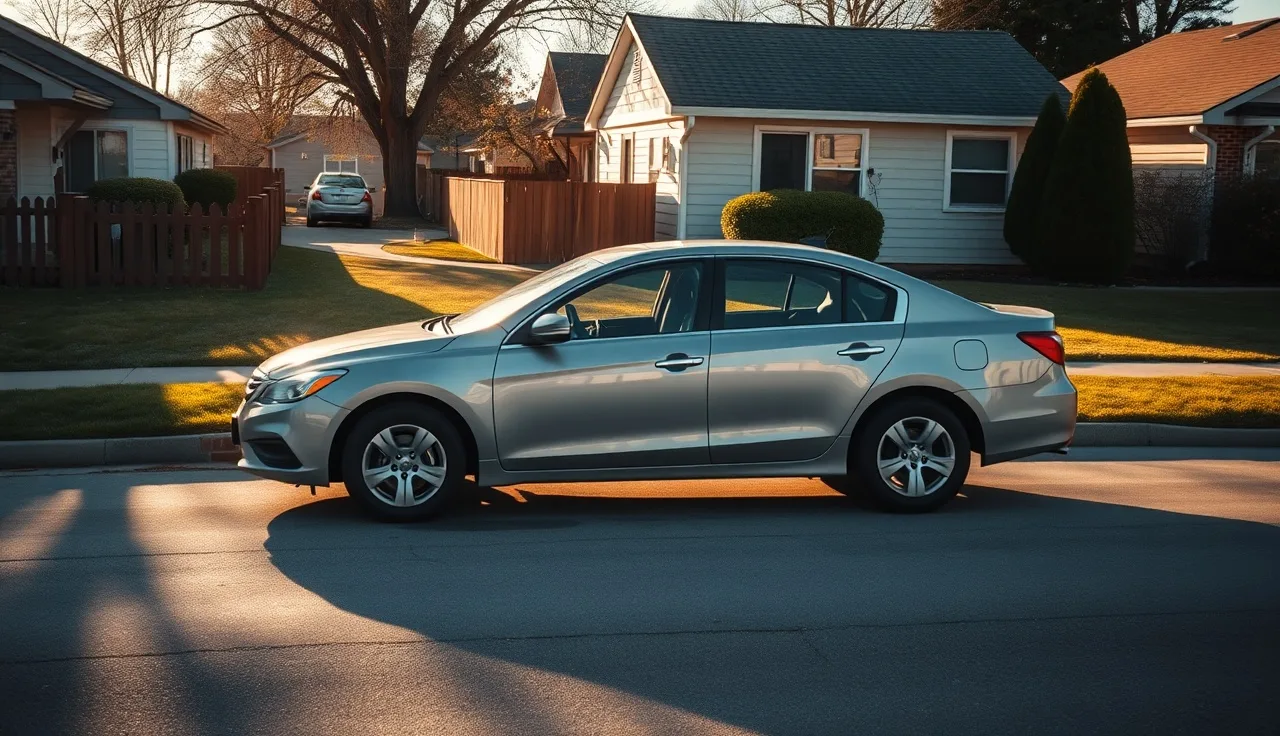
One vehicle is fully excluded from your SSI resource calculation, no matter its value, as long as you or a member of your household uses it for transportation. [2] A $40,000 pickup truck counts as zero. So does a $500 beater. SSA's Program Operations Manual System (POMS), at SI 01130.200, says one automobile is excluded from resources "regardless of value" when it's used for transportation. [2]
That wasn't always the rule. Before 1999, SSA capped the vehicle exclusion at a dollar value. The cap is gone now. The only test left is whether the car actually gets driven. Park it in the driveway and take it to doctor's appointments, grocery runs, or work, and it's excluded.
A second vehicle is a different animal. Any car beyond the first counts as a countable resource at its equity value. Equity value means current market value minus whatever you still owe on it. Own two cars, and SSA excludes one and counts the other toward your $2,000 limit. [2]
Here's how it plays out. Say you own a 2015 Civic worth $10,000 with no loan (equity: $10,000) and a 2010 Corolla worth $4,000 with no loan (equity: $4,000). SSA excludes the Civic, because it excludes the vehicle with the higher equity value to give you the better result. The Corolla's $4,000 equity counts as a resource, and that alone pushes you past the $2,000 individual limit.
One car, any value, doesn't count. Two cars, and the second one's equity does.
What if the car is worth a lot? Does value ever matter?
Not for the first vehicle used for transportation. SSA dropped the value cap in 1999, so a luxury car, a modified van, or a classic used as daily transportation all get the same full exclusion. [2]
Value starts mattering only with a second vehicle, or a vehicle nobody uses for transportation. In those cases SSA counts the equity against your resource limit.
There's one spot where value feels like it matters: selling one car to buy another. While the sale is in motion, the cash from the sale counts as a resource. SSA expects you to replace the vehicle within a reasonable time if you want to stay excluded. Sell a car and spend the money on anything other than a replacement, and that cash is a countable resource in the month you get it.
What counts as a vehicle used for transportation?
SSA's definition is deliberately broad. A vehicle qualifies for the transportation exclusion if you or any member of your household uses it for transportation. You don't have to be the driver. If your spouse drives you to dialysis three times a week, that car is used for your transportation and it qualifies. [2]
The car doesn't have to run perfectly, but it should be in use or reasonably expected to return to use. A car in the garage with a blown head gasket you're actively fixing would likely still qualify. A car that hasn't moved in years, with no repair plan, is hard to defend as a transportation vehicle.
Specially modified vehicles, like wheelchair vans with lifts or hand controls, are excluded regardless of value under a separate provision too, so people with serious mobility impairments get an extra layer of protection. [2]
RVs used as a primary residence get excluded as the home, not as a vehicle. An RV used purely for recreation, not as a home and not for getting to work or medical care, gets counted differently depending on the facts.
How does SSA calculate a vehicle's equity value?
When SSA does count a vehicle (a second car, say), it uses equity value: the current market value of the car minus any outstanding loan balance on it. [3]
SSA leans on a recognized pricing guide to set market value. For years that meant the NADA guide or something similar. The number turns on the car's condition, mileage, and local market.
Owe $8,000 on a car worth $10,000? Equity is $2,000. That $2,000 counts toward your resource limit. Owe more than the car is worth, and equity is zero, so it can't push you over.
For joint ownership, SSA counts only your share of the equity. You and a sibling own a car worth $5,000 with no loan? Your share is $2,500.
Are there other vehicle exclusions beyond the one-car rule?
Yes. SSA's POMS lists several situations where a vehicle drops out of resources entirely, on top of the basic one-car rule. [7]
A vehicle used for income-producing purposes is excluded. Use a truck for a small landscaping business, and it's excluded as property essential to self-support. [7]
A vehicle required for medical treatment, or needed because of a physical condition, is excluded. The obvious case is an adapted van for a wheelchair user, but it also covers a situation where your specific condition demands a vehicle that isn't a standard car. [2]
A vehicle used as the household's primary home is excluded as real property, not as a vehicle. That covers RVs and mobile homes lived in full time. [3]
There's also a catch-all: SSA can exclude a vehicle if going without it would cause undue hardship. That's a judgment call at the field office, and it's worth raising when your situation is unusual.
The table below sums up how SSA treats different vehicle situations.
| Vehicle situation | Countable toward $2,000 limit? |
|---|---|
| One car, any value, used for transportation | No (excluded) |
| Second car, used for transportation | Yes, at equity value |
| Car used for business/income | No (excluded as business asset) |
| Specially modified vehicle for disability | No (excluded) |
| RV used as primary home | No (excluded as home) |
| Inoperable car not being repaired | Potentially yes (field office judgment) |
What other assets count toward the SSI resource limit?
The car rule makes more sense once you see it next to everything else SSA weighs. Some big assets are excluded. Your home (the one you live in) is excluded entirely. Household goods and personal effects are excluded. Life insurance with a face value under $1,500 is excluded. Burial funds up to $1,500 are excluded. [3]
Countable resources include bank account balances, stocks, bonds, a second car (at equity value), real estate you don't live in, and most things you could sell for cash. [3]
SSA looks at resources on the first calendar day of each month. Over the limit on January 1, and you're ineligible for January, even if you spend down below the limit on January 2. The timing is the whole game.
If you're tracking your finances during an SSI claim, it helps to read up on disability benefits and how resources interact with your monthly payment.
The resource rules also touch ABLE accounts and special needs trusts. Money in an ABLE account (up to $100,000) doesn't count as a resource for SSI. [4] A properly drafted special needs trust doesn't count either. These tools exist because the $2,000 limit is so low.
Can you transfer or sell a car to get under the resource limit?
You can sell a car. But SSA has rules about transfers for less than fair market value, and they bite. Give away or sell a car for less than it's worth to slide under the limit, and SSA can hit you with a period of ineligibility. [3]
SSI's look-back period isn't Medicaid's five years. For SSI, SSA reviews any transfer in the 36 months before you apply. Transfer an asset for less than fair market value inside that window, and SSA treats the transfer as if you still hold the asset's value. [5]
Selling a car at fair market value is fine. Handing it to a relative to get under the limit is not. SSA asks about recent transfers during the application, so plan on it coming up.
Over the limit right now? The usual move is to spend down countable resources on exempt things: paying off debt, making home repairs, buying needed medical equipment, or pre-paying funeral expenses up to the allowed amount. Talk to a benefits counselor before doing anything big. The rules are precise, and getting one wrong delays your benefits.
If you want to organize everything before you call SSA, DisabilityFiled's guided intake tool lets you document your assets and resources in one place so you walk into the interview with a clear picture.
How does SSA verify your vehicle information?
SSA checks vehicle ownership against state motor vehicle records. When you apply for SSI, you list every vehicle registered to you or your household, and SSA cross-references it. [1]
You'll usually give the make, model, year, and rough value of each vehicle, plus any loan details. SSA can and does pull DMV records, so don't assume an undisclosed car stays hidden. Leaving a vehicle off the application counts as a material omission and can trigger overpayment recovery, penalties, or a fraud referral in serious cases.
Have a car titled in your name that isn't really yours (a relative's car put in your name for insurance reasons)? Disclose it and explain. SSA weighs actual ownership over registration, and you'll need documentation to show you don't hold a real ownership interest.
What happens if your vehicle situation changes while on SSI?
SSI is a monthly program. Your eligibility gets recalculated every month from current income and resources. Pick up a second vehicle, and you have to report it to SSA within 10 days after the end of the month you got it. [1]
Missing that report is one of the top reasons SSI recipients end up with overpayments. SSA finds out eventually through DMV records, and when they do, they figure out how much you were overpaid and come collect.
Inherit a car, and the month you receive it is the month it first counts as a resource. Sell the second car fast, or point to another exclusion that fits, and you might dodge a full month of ineligibility. But you'd need to move quickly.
Recipients should also know SSA runs periodic redeterminations, usually every one to six years depending on your case, where it reviews all your income and resources. [8] Vehicle ownership is part of that review. Keeping your records current with SSA is the plainest way to stay out of trouble.
For a wider view of how social security disability payments and schedules work month to month, the payment schedule guides help you track when money lands and how resources hit your check.
Does a car affect SSDI eligibility the way it affects SSI?
No. SSDI (Social Security Disability Insurance) has no resource test at all. No asset limit exists. You can own three cars, a rental property, and a fat savings account, and none of it touches SSDI eligibility. [6]
SSDI turns on your work history and whether you're medically disabled under SSA's definition. Your assets are irrelevant to the SSDI decision.
That's one of the sharpest practical splits between the two programs. Plenty of people applying for disability benefits don't realize they're applying for both at once (SSA usually processes both together when you might qualify for both). If you have real assets but a qualifying medical condition, SSDI is where your car genuinely doesn't matter.
For SSI-only applicants, the one-car exclusion decides cases. For SSDI applicants, the car question never enters the eligibility math.
What should you do before applying for SSI if you own a car?
Get a clear picture of your vehicle situation before you apply. List every vehicle registered to you or anyone in your household. Look up each one's current market value on Kelley Blue Book or a similar source. Find the payoff amount on any loans. Then work out equity value for each vehicle.
One car? You're almost certainly fine on the vehicle front. Two or more? Run the equity numbers and see whether the second vehicle's equity pushes you past $2,000 ($3,000 for couples).
Over the limit? Talk to a benefits counselor or a disability attorney before you transfer any vehicle. The transfer-for-less-than-fair-value rules are no joke. You can legitimately sell a second car at fair market value and put the proceeds toward debt or something exempt.
Check your bank accounts, investment accounts, and other assets too. The car is often not the only resource problem. The full picture is what decides the case.
When you're ready, SSA's online application lives at SSA.gov. If the resource rules feel like too much to track alone, DisabilityFiled's guided intake process walks you through documenting exactly this so your application is organized from day one. You can also read how to apply for social security disability for the full process.
For payment amounts once you're approved, the social security disability benefits pay chart gives you real numbers.
Frequently asked questions
Does SSA count a car worth more than $2,000 as a resource for SSI?
No. SSA excludes one vehicle from SSI resources regardless of value, as long as you or your household uses it for transportation. A car worth $30,000 counts as zero toward your $2,000 resource limit. This has been the rule since SSA dropped the value cap in 1999. Only a second vehicle's equity value would count.
What if I own two cars? Which one does SSA exclude?
SSA excludes the vehicle with the higher equity value, which gives you the better outcome. The second vehicle's equity value (current market value minus any loan balance) counts toward your $2,000 limit. If that second car's equity is under $2,000 and you have no other significant countable resources, you may still qualify.
Does a financed car count differently than a car I own outright?
For the one-car exclusion, financing doesn't matter. One vehicle used for transportation is excluded either way. For a second vehicle, SSA counts only the equity value (market value minus the loan balance), so a heavily financed second car might have little or no equity and might not push you over the limit.
Can I give my second car to a family member to get under the SSI resource limit?
Be careful. Transfer a vehicle for less than fair market value within 36 months of applying for SSI, and SSA can impose a period of ineligibility. Selling it at fair market value is fine. Giving it away or dumping it far below market value to get under the limit can trigger a penalty. Talk to a benefits counselor before any transfer.
Does a car affect SSDI eligibility?
No. SSDI has no resource test. You can own any number of vehicles with no effect on SSDI eligibility. SSDI is based on your work record and medical disability, not your assets. The car question only matters for SSI, which has a $2,000 individual resource limit.
What if my car is specially modified for my disability?
A specially modified vehicle is excluded from SSI resources under a separate provision, on top of the general one-vehicle exclusion. A wheelchair-accessible van with a lift, hand controls, or other modifications required by your disability is excluded regardless of value. That gives extra protection if you need a more expensive accessible vehicle.
How does SSA find out what cars I own?
SSA cross-checks state motor vehicle records. When you apply for SSI, you must list every vehicle registered to you or your household, and SSA verifies it against DMV records. Fail to disclose a vehicle and SSA finds it later (which it usually does), and you may face overpayment recovery and potential penalties.
Does an RV or mobile home count as a car for SSI purposes?
It depends on use. If an RV or mobile home is your primary residence, SSA excludes it as your home, not as a vehicle. If it's purely recreational and you have a separate primary home, SSA may count it as a resource. RVs used for both transportation and housing get evaluated based on primary use.
What if the car is registered in my name but belongs to someone else?
SSA weighs ownership interest over registration. If a car is titled in your name but genuinely belongs to someone else (a relative's car you titled for insurance reasons), you can explain and provide documentation showing you have no real ownership interest. SSA makes a judgment call. Verbal claims alone rarely cut it; written agreements or other documentation help.
Do I need to report a new car to SSA while receiving SSI?
Yes. You must report any change in resources, including a new vehicle, within 10 days after the end of the month it happened. If the new vehicle is your second, its equity value counts toward your resource limit that month. Failing to report is a common cause of SSI overpayments, and SSA will recover them.
Does a car used for my small business count as a resource for SSI?
A vehicle used for income-producing activity is excluded from SSI resources as property essential to self-support. Drive for a rideshare service, run a delivery business, or use the vehicle for any self-employment, and it qualifies. You'd need to show the vehicle is actually used for the business, more than claim it.
What is the SSI resource limit in 2025?
The SSI resource limit is $2,000 for an individual and $3,000 for a married couple in 2025. These limits have not changed since 1989. Congress has not passed legislation to raise them, and SSA can't adjust them on its own. Advocates have pushed for increases for years, but as of 2025 the limits are unchanged.
Can money from selling a car hurt my SSI eligibility?
Yes, temporarily. When you sell a car, the proceeds are cash, which counts as a resource in the month you receive them. If that cash pushes you over $2,000, you're ineligible that month. If you're buying a replacement, reinvesting the proceeds fast minimizes the ineligibility. Spending the cash on exempt items also brings your resources back down.
Sources
- SSA.gov, Understanding SSI: SSI Resources: SSI resource limits are $2,000 for an individual and $3,000 for a couple; SSA evaluates resources on the first of each month
- SSA POMS SI 01130.200, Automobiles: One automobile is excluded from SSI resources regardless of value when used for transportation; additional vehicles counted at equity value; specially modified vehicles excluded
- SSA POMS SI 01110.003, What Is a Resource and What Is Not a Resource: SSA defines resources as cash or assets that can be converted to cash; equity value defined as market value minus loan balance; home and household goods excluded
- SSA.gov, ABLE Accounts and SSI: ABLE account balances up to $100,000 do not count as resources for SSI eligibility
- SSA POMS SI 01150.001, Transfer of Resources for Less Than Fair Market Value: SSA applies a 36-month look-back period for resource transfers below fair market value; transferred value treated as if still owned
- SSA.gov, Disability Benefits (Publication 05-10029): SSDI eligibility is based on work history and medical disability; there is no resource or asset test for SSDI
- SSA POMS SI 01130.430, Exclusion of Property Essential to Self-Support: Vehicles used for income-producing activity excluded from SSI resources as business property essential to self-support
- SSA.gov, SSI Redeterminations: SSA conducts periodic redeterminations of SSI eligibility, reviewing income and resources; frequency varies based on likelihood of changes
- SSA.gov, Supplemental Security Income (SSI) Overview: SSI is a needs-based program with both income and resource tests; distinct from SSDI which is based on work record
- National Academy of Social Insurance, Rethinking SSI Asset Limits (2023): SSI resource limits have remained unchanged at $2,000/$3,000 since 1989, with significant advocacy for modernization