Last updated 2026-07-09
TL;DR
SSA pays SSI and SSDI two ways: direct deposit to your bank account, or the Direct Express prepaid debit card if you don't bank anywhere. Paper checks stopped for nearly everyone in March 2013. Setting up or changing your payment method takes about 10 minutes online, by phone, or in person, and SSA processes the change within 30 days.
Does SSA still mail paper checks for SSI and SSDI?
Almost never. Since March 1, 2013, nearly every Social Security and SSI recipient has to get paid electronically. Congress set that in motion in 2011 through the Debt Collection Improvement Act mandate, and Treasury enforced it [1]. The reason is money: SSA estimates electronic payment costs the government about $1.00 less per transaction than a paper check, and that gap multiplies across tens of millions of beneficiaries [2].
Narrow hardship waivers exist. If a bank account or a Direct Express card would cause you real hardship, SSA can grant a temporary paper check exemption. These are uncommon and get reviewed. If you applied for SSDI or SSI recently, you almost certainly picked an electronic option before your first payment ever landed.
So assume you need an electronic payment method. If you don't have one yet, the rest of this article walks through your choices.
What are the two main ways to receive SSI and SSDI payments?
Two standard electronic options, and one that works only sometimes.
Direct deposit to a bank or credit union account. Your payment lands in your checking or savings account on the scheduled date. Any bank, credit union, or institution that accepts ACH transfers works. This is the most flexible choice because you can use your own debit card, write checks, and move money however you want.
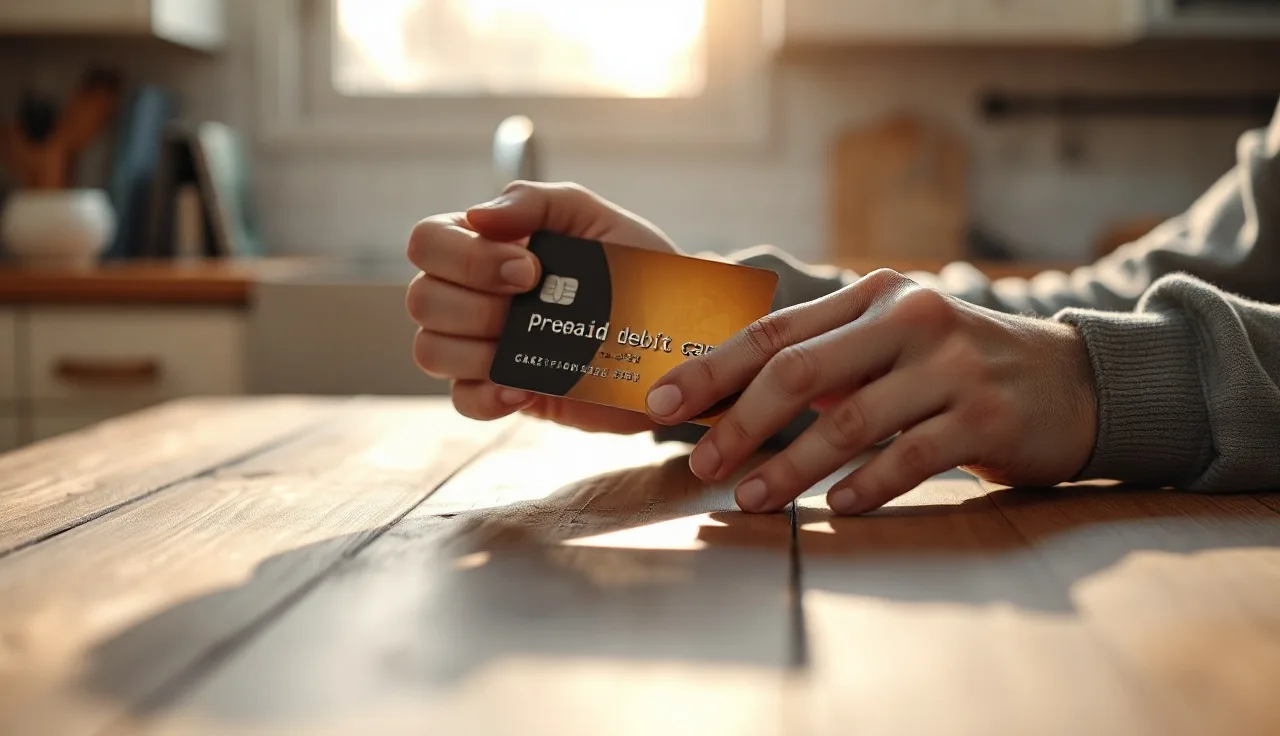
Direct Express prepaid debit card. No bank account, or you'd rather not use one? Comerica Bank runs the Direct Express card under contract with the U.S. Department of the Treasury. Your SSI or SSDI payment loads onto the card each month automatically. You can spend it anywhere Mastercard is accepted, pull cash at ATMs, pay bills, and shop online. No credit check to get it [3].
The third option is direct deposit to a prepaid card you already own, as long as it has a real routing number and account number. Some cards from Green Dot, Chime, and similar companies support this. Plenty don't. Confirm with the card issuer before you hand those numbers to SSA.
Here's my read. If you have no bank account, Direct Express is the easiest path. If you already bank somewhere, plain direct deposit is simpler to live with over time.
How does the Direct Express debit card work for SSI and SSDI?
The Direct Express card is a Mastercard-branded prepaid debit card built for federal benefit recipients. Comerica Bank issues it for the Treasury's Bureau of the Fiscal Service [3]. Your money loads on the same day a bank account would have received the deposit.
You can check your balance three ways: call 1-888-741-1115, use text alerts (you set those up at enrollment), or log in at usdirectexpress.com. You can also check at an ATM, though an out-of-network machine may charge a fee.
The fees are where people get pinched, so know them. There's no monthly fee for the card. You get one free ATM withdrawal per deposit cycle at MoneyPass ATMs. After that, each MoneyPass withdrawal costs $0.85, and other machines cost more [3]. Cash back at a store register is free. Signature purchases (where you sign instead of entering a PIN) are free. Calling customer service for a transaction history costs $0.75 per inquiry after your first free one each month.
You can add a secondary card for a family member or caregiver for a small fee, and the card handles automatic bill payment for recurring charges.
The real limit is that this is not a full bank account. You can't write checks. You can't route an employer paycheck onto the same card. Your spending stops at the card balance. If you pick up work while on SSDI (say, under Ticket to Work or the trial work rules), get a real bank account so two income streams don't collide.
Want the difference between the two programs themselves? See What Is SSDI? Social Security Disability Insurance Explained and What Is SSI? Supplemental Security Income Explained.
How do you set up direct deposit for SSI or SSDI?
Three ways, all free.
Online through my Social Security. Go to ssa.gov/myaccount, sign in or create an account, and open "Benefits & Payments." Update your direct deposit there in a few minutes. You need your bank's routing number and your account number, both printed on a check and shown in most banking apps [4].
By phone. Call SSA at 1-800-772-1213, Monday through Friday, 8 a.m. to 7 p.m. local time. They'll update your payment info over the phone. Have your routing number, account number, and Social Security number in front of you.
In person. Bring a voided check or a bank statement showing both numbers to your local SSA office. Staff enter the change while you wait. Find the nearest office at ssa.gov/locator [10].
SSA generally processes a change within 30 days. If you make the change too close to your payment date, that next payment may still go to the old account. Plan for that, and don't close the old account until you've watched a deposit hit the new one.
Still waiting on a decision? You'll be asked for payment information when SSA contacts you about approval, so you can provide it then.
To see exactly when your money should land, the SSDI payment schedule 2025 article lays out the calendar.
How do you sign up for the Direct Express card?
When SSA approves benefits and you don't already have direct deposit, they often mail you a letter naming Direct Express as your default. You can also enroll yourself before that.
Call the Direct Express enrollment line at 1-800-333-1795 (Comerica runs it), or call SSA at 1-800-772-1213 and ask to be enrolled. You can sign up at a Social Security office too. There's no online enrollment portal for new cards through SSA; new sign-ups happen by phone or in person.
After you enroll, the card arrives by mail in 7 to 10 business days, and your payment loads automatically on your next scheduled date [3].
Want to move to a bank account later? Follow the direct deposit steps above. The card keeps working until you tell SSA about the switch and confirm the new deposit has landed.
What are the payment amounts and dates for 2025?
What you get depends on your program. SSDI is based on your earnings record. SSI is a flat federal rate that some states top up.
For SSDI, the average monthly payment in 2025 runs about $1,580, though your amount is set by your lifetime earnings when SSA calculates your Primary Insurance Amount [5]. The 2025 maximum SSDI benefit is $4,018 per month.
For SSI, the 2025 federal benefit rate is $967 per month for an individual and $1,450 for an eligible couple [6]. Some states add a supplement on top.
Dates run on a fixed schedule. SSI always pays on the first of the month, or the Friday before if the first lands on a weekend or holiday. SSDI dates depend on your birth date [5]:
| Birth date range | SSDI payment day |
|---|---|
| 1st through 10th | Second Wednesday of the month |
| 11th through 20th | Third Wednesday of the month |
| 21st through 31st | Fourth Wednesday of the month |
| Before May 1997 (or receiving both SSI and SSDI) | Third day of the month |
The money hits your bank account or Direct Express card on that date, not the next day, in most cases. When a payment date falls on a federal holiday, SSA usually pays the prior business day.
For named months, the ssdi june 2025 payments and ssdi may 2025 payment dates articles have the exact calendars.
Can SSI and SSDI payments go to the same bank account?
Yes. If you draw both SSI and SSDI (called concurrent benefits), both can go to one bank account or one Direct Express card. SSA just makes two separate deposits, usually on different dates: SSI on the first, SSDI on your scheduled Wednesday. You don't need two accounts.
The one reason to keep them apart is the SSI resource limit. SSI requires your countable resources stay under $2,000 for an individual or $3,000 for a couple [6]. Cash sitting in a bank account counts. Some people track SSI deposits separately so they don't drift over $2,000 in countable assets by accident. That's a budgeting habit, not an SSA rule.
Not sure whether you qualify for one program or both? SSDI vs SSI: What's the Difference and Which Do You Qualify For? sorts it out.
What happens if your SSI or SSDI direct deposit goes to a closed or wrong account?
The bank bounces the deposit back to SSA. Then SSA reissues it, and that takes time. SSA advises allowing up to two weeks for a returned payment to be reissued [4].
Do not close your old bank account until a deposit has cleared the new one. That single mistake causes more self-inflicted delays than anything else.
Missing a deposit you expected? Call SSA at 1-800-772-1213. They can trace the payment through ACH records. If the money went to an account you don't recognize, that's a different problem: either a data entry error at SSA or, rarely, fraud. Report suspected fraud to SSA's Office of the Inspector General at 1-800-269-0271 [8].
Direct Express cardholders: if your card is lost or stolen, call 1-888-741-1115 right away. They freeze the card and issue a replacement. Standard replacements arrive in 7 to 10 business days; expedited delivery costs $13.50 [3].
Does having a bank account affect SSI eligibility or payment amount?
For SSDI, no. SSDI is not means-tested. Your bank balance has zero effect on SSDI eligibility or your payment amount.
For SSI, it matters a lot. SSI is needs-based with a hard resource limit. Countable resources can't top $2,000 for an individual or $3,000 for a couple [6]. Cash in a checking or savings account is a countable resource [9]. So if your SSI money piles up in an account, you can lose eligibility.
Some assets are excluded. Your home (if you live in it), one vehicle, and certain other items don't count. But a savings balance over $2,000 can trigger a notice and a possible suspension.
This is one reason some SSI recipients like the Direct Express card: spending down the deposit before month's end is easier when it sits on a prepaid card that earns no interest. The rule doesn't change, but the tracking gets simpler.
Curious how working affects your income and deposits? working-and-benefits covers the earned income rules.
Can a representative payee receive your SSI or SSDI payment?
Yes. If SSA has appointed a representative payee because you can't manage your benefits yourself, the payee receives the payment for you. The deposit goes to the payee's bank account or a separate account the payee sets up for you. The payee has to spend the money on your care and keep records [7].
SSA mails payee notices and annual accounting requests straight to the payee. If you think a payee is misusing your funds, report it to SSA at 1-800-772-1213 or to the Office of the Inspector General at 1-800-269-0271.
A payee can use direct deposit or a Direct Express card. Organizational payees like group homes and social service agencies usually use direct deposit to a dedicated custodial account. Individual payees (a parent, spouse, or friend) often use their own bank account, but SSA still requires them to track your funds separately.
If you're working through the application and want your claim organized before it reaches the payment stage, DisabilityFiled's guided intake tool helps you pull your medical and work history into a clear claim summary so you're ready when SSA asks.
What should you do if you move or change banks after approval?
Tell SSA right away. Late notice is the top cause of missed or bounced payments.
For a new bank account, sign in to my Social Security at ssa.gov/myaccount or call 1-800-772-1213 and give your new routing and account numbers. Allow 30 days, and keep the old account open until a deposit lands in the new one.
A new address is a separate update. Changing your bank account does not change your mailing address in SSA's system. Your address still matters even with electronic payments, because SSA mails award letters, overpayment notices, cost-of-living adjustment letters, and other documents. Update it at ssa.gov/myaccount or in person.
If you also have Medicare (most SSDI recipients get it after 24 months of benefits), tell Medicare your new address too. Medicare and SSA share some records, not all.
For what else arrives by mail after approval, ssa ssdi ssi direct checks 2025 covers the full payment and notice schedule.
Are there scams targeting SSI and SSDI payment methods?
Yes, and they're everywhere. SSA's Office of the Inspector General consistently ranks Social Security impersonation among the top fraud types reported in the country [8].
The usual play: someone calls claiming to be from SSA and says your benefits will be suspended unless you switch payment methods, buy gift cards, or read off your bank account number. SSA will never call and demand immediate payment or ask you to confirm banking details out of the blue.
Another version is a fake email or text dressed up as a Direct Express alert, asking you to click a link and type in your card number. Direct Express only texts you if you signed up for their alerts, and even then they'll never ask for your full card number by text.
Get a suspicious call claiming to be SSA? Hang up and call SSA yourself at 1-800-772-1213. Report scams to the OIG hotline at 1-800-269-0271 or online at oig.ssa.gov [8].
Protect your Direct Express card number the way you'd protect any debit card. If it's compromised, call 1-888-741-1115 right away.
Frequently asked questions
How do I set up direct deposit for my SSI or SSDI payment?
Sign in to my Social Security at ssa.gov/myaccount and open Benefits & Payments, or call SSA at 1-800-772-1213 with your routing number and account number. You can also visit your local SSA office with a voided check. Changes take effect within 30 days. Keep your old account open until the deposit confirms in the new one.
What is the Direct Express card and how do I get one?
The Direct Express card is a Mastercard prepaid debit card from Comerica Bank, issued through the U.S. Treasury, for federal benefit recipients without a bank account. Enroll by calling 1-800-333-1795 or by contacting SSA. No credit check. The card arrives in 7 to 10 business days after enrollment, and your payment loads automatically each month on your scheduled date.
What are the Direct Express card fees?
No monthly fee. You get one free ATM withdrawal per payment cycle at MoneyPass ATMs; each additional one costs $0.85. Cash back at retail registers is free. Expedited card replacement costs $13.50. Extra transaction history from customer service beyond one free inquiry per month costs $0.75. Signature and PIN purchases have no fee.
When does my SSDI payment arrive on my Direct Express card or bank account?
SSDI deposits follow the same schedule no matter the payment method. Birthday on the 1st to 10th: second Wednesday. The 11th to 20th: third Wednesday. The 21st to 31st: fourth Wednesday. Receiving Social Security since before May 1997: the third of the month. SSI always arrives on the first of the month.
Can I receive both SSI and SSDI on the same bank account or debit card?
Yes. Both payments can go to one bank account or your Direct Express card. SSI arrives on the first of the month and SSDI arrives on your Wednesday. If you receive SSI, watch your balance: the $2,000 resource limit for individuals counts cash in your account, so avoid letting it build past that.
What if my SSDI or SSI direct deposit goes to the wrong account?
When a bank returns a deposit, SSA gets the funds back and reissues the payment, which can take up to two weeks. Call SSA at 1-800-772-1213 to report the problem. To avoid it entirely, never close an old bank account until you've confirmed the first deposit landed in the new one.
Does SSA still send paper checks for SSI or SSDI?
Almost never. Federal law since March 1, 2013 requires electronic payment for nearly all federal benefits, including SSI and SSDI. Paper checks are only available through a formal hardship waiver, which SSA grants rarely and reviews. Without a bank account, the Direct Express card is the standard alternative.
Does having money in a bank account affect my SSI payment amount?
Yes, if you're on SSI. SSI has a $2,000 individual resource limit ($3,000 for a couple). Cash in a checking or savings account counts toward it. Go over, and SSA can suspend your SSI. SSDI has no resource limit, so bank balances don't affect SSDI eligibility or payment amount at all.
Can my representative payee receive my disability payment by direct deposit?
Yes. If SSA has assigned a representative payee, the deposit goes to the payee's account or a dedicated account the payee controls for you. The payee must spend the funds on your care and is subject to SSA's annual accounting. If you suspect misuse, report it to SSA at 1-800-772-1213 or the OIG at 1-800-269-0271.
Can I use a prepaid debit card other than Direct Express for my SSI or SSDI deposit?
Sometimes. Some prepaid cards (Chime, Green Dot, and others) have routing and account numbers that accept ACH direct deposit. If your issuer confirms it takes government ACH deposits and gives you a valid routing and account number, you can give those to SSA. Not all prepaid cards work, so confirm with the issuer first.
How do I report a lost or stolen Direct Express card?
Call Direct Express right away at 1-888-741-1115. They freeze the card and issue a replacement. Standard replacements arrive in 7 to 10 business days at no charge. Expedited delivery is available for $13.50. Report any unauthorized transactions on the same call so they can start the dispute process.
What scams should I watch for related to my disability payment method?
The most common one is a caller impersonating SSA who says your benefits will be suspended unless you verify your bank account or switch payment methods. SSA will never call and demand that unprompted. Hang up and call SSA directly at 1-800-772-1213. Report scams to the OIG at 1-800-269-0271. Direct Express never asks for your full card number by text or email.
How long does it take for a direct deposit change to take effect with SSA?
SSA generally processes direct deposit changes within 30 days. If you submit the change too close to your payment date, that payment may still go to the old account. Keep the old account open and funded enough to avoid overdrafts until you confirm the first deposit in the new account. Then close the old one safely.
Do I need to update my address separately from my bank account with SSA?
Yes. Changing your direct deposit does not update your mailing address. SSA still mails award letters, annual cost-of-living adjustment notices, and overpayment letters. Update your address at ssa.gov/myaccount or by calling 1-800-772-1213. If you receive Medicare, update that address separately.
Sources
- U.S. Treasury, Bureau of the Fiscal Service - Electronic Federal Benefit Payments: Federal law required electronic payment for nearly all federal benefits effective March 1, 2013, under the Debt Collection Improvement Act mandate.
- SSA.gov - Go Direct campaign fact sheet: SSA estimates electronic payments save approximately $1.00 per transaction compared to paper checks.
- U.S. Direct Express - Program overview and fee schedule: Direct Express is a Mastercard prepaid debit card issued by Comerica Bank under contract with the U.S. Treasury; one free ATM withdrawal per deposit cycle at MoneyPass ATMs, additional withdrawals $0.85 each; expedited replacement $13.50.
- SSA.gov - my Social Security account, direct deposit: Beneficiaries can update direct deposit information online via my Social Security; SSA processes changes and advises allowing up to 30 days, and up to two weeks to reissue a returned payment.
- SSA.gov - Benefit payment schedule: SSDI payment dates are determined by the beneficiary's birth date: 2nd Wednesday for birthdays 1-10, 3rd Wednesday for 11-20, 4th Wednesday for 21-31; average SSDI payment 2025 approximately $1,580/month; maximum $4,018/month.
- SSA.gov - SSI federal benefit rate and resource limits 2025: Federal SSI benefit rate in 2025 is $967/month for an individual and $1,450 for an eligible couple; countable resource limit is $2,000 individual / $3,000 couple.
- SSA.gov - Representative Payee Program: Representative payees receive benefit payments on behalf of beneficiaries who cannot manage their own funds and must use funds for the beneficiary's care; subject to annual accounting.
- SSA Office of the Inspector General - Fraud prevention and reporting: SSA OIG consistently ranks Social Security impersonation calls among the top fraud types reported; OIG hotline is 1-800-269-0271.
- SSA POMS SI 01110.003 - Countable resources for SSI: Cash and bank account balances are countable resources for SSI purposes and count toward the $2,000 individual resource limit.
- SSA.gov - Find a Social Security office: SSA provides an office locator tool for beneficiaries who need to update payment information in person.