Getting SSDI for Hip Replacement: The Short Answer
TL;DR: Hip replacement qualifies for SSDI under Listing 1.17 (Reconstructive surgery of a major weight-bearing joint) with an automatic 12-month disability period after surgery. After 12 months, you must show ongoing limitations such as inability to walk effectively, restricted range of motion, or need for assistive devices. The SSA evaluates walking ability, stair climbing, and whether you can transition between sitting and standing. Document post-surgical limitations carefully to maintain benefits beyond the initial year.DisabilityFiled offers a $49 Complete Packet that organizes your information for your own application. It is a document preparation service, not a law firm, and it does not provide legal advice or guarantee any outcome.
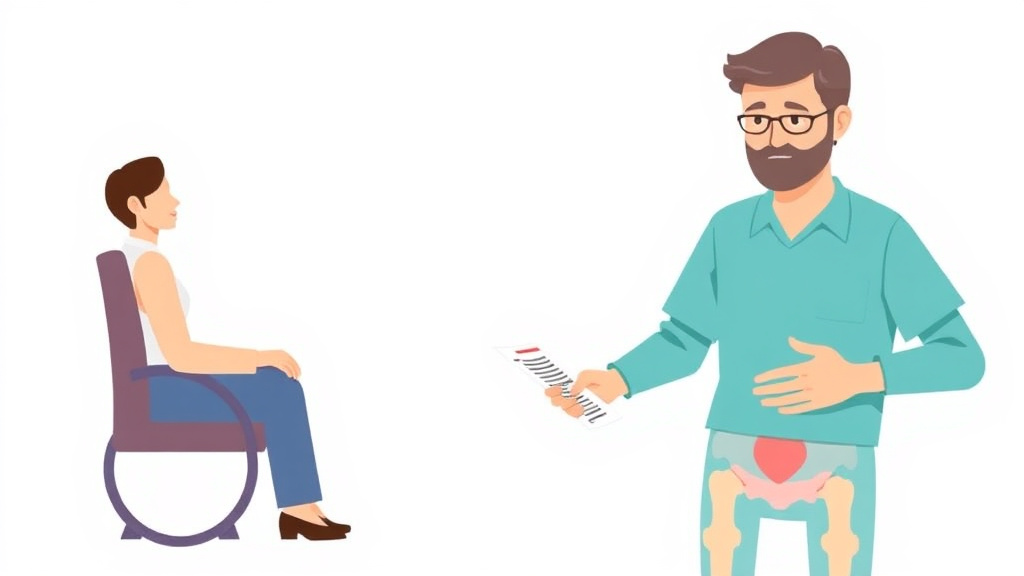
SSA Blue Book Listing for Hip Replacement
Hip replacement is evaluated under Listing 1.17 (Reconstructive surgery or surgical arthrodesis of a major weight-bearing joint). The same listing applies to hip and knee replacements.
Key points:
- Automatic 12-month disability period from the date of surgery
- After 12 months, the SSA reassesses using functional criteria
- You must show inability to ambulate effectively if claiming continued disability
- Complications like dislocation, infection, or prosthesis failure strengthen continued claims
What Medical Evidence the SSA Needs
Pre-Surgical
- X-rays or MRI showing severe hip joint damage
- Documentation of failed conservative treatments
- Orthopedic assessment recommending surgery
Surgical
- Operative report with surgical approach and prosthesis type
- Any complications (dislocation, infection, DVT, nerve damage)
- Post-operative imaging showing prosthesis placement
Post-Surgical (For Claims Beyond 12 Months)
- Range of motion measurements at follow-up visits
- Gait analysis or physical therapy progress notes
- Continued need for assistive devices
- Any revision surgery planned or completed
- Hip precautions that limit daily activities
How to Describe Your Limitations in SSA Language
| What You Say | What the SSA Needs to Hear |
|---|---|
| "My hip still doesn't feel right" | "Eighteen months post-total hip arthroplasty, I have persistent anterolateral pain with hip flexion limited to 80 degrees, preventing me from sitting in a standard chair for more than 20 minutes or transitioning from sit-to-stand without upper extremity assistance" |
| "I'm afraid it will dislocate" | "Due to recurrent dislocation risk documented by my surgeon, I must maintain posterior hip precautions including no flexion beyond 90 degrees, no internal rotation, and no adduction past midline, which eliminates my ability to perform activities required for competitive employment" |
| "My other hip is bad too" | "Contralateral hip shows Grade 4 osteoarthritis with bone-on-bone contact, and the combined bilateral hip impairment prevents standing, walking, or sitting for durations required for any work activity" |
Common Denial Reasons for Hip Replacement
- Assumed full recovery after 12 months. The SSA may presume a successful outcome. Get your surgeon to document any ongoing restrictions.
- Precautions dismissed. Hip precautions (no bending past 90 degrees, no crossing legs) are real work limitations but the SSA may not recognize them without proper documentation.
- Sedentary work assumed possible. The SSA may argue you can sit at a desk, but sitting limitations from hip surgery are real and should be documented.
- Age factor. Younger applicants face more scrutiny because recovery is typically better in younger patients.
Compassionate Allowance Status
Hip replacement is not on the Compassionate Allowance list, but the 12-month automatic disability period under Listing 1.17 provides expedited coverage for the first year.

Tips for the Function Report (Form SSA-3373)
- Sit-to-stand transitions: Describe if you need armrests, a raised seat, or assistance to get up. Many jobs require this transition repeatedly.
- Walking surface issues: Note difficulty on uneven ground, stairs, or slopes. Most workplaces have varied surfaces.
- Driving limitations: If you cannot drive or can only drive short distances, this affects job access.
- Sleep position: If hip pain disrupts sleep, this affects daytime function and work reliability.
- Dislocation precautions: List every movement restriction your surgeon imposed. Each one eliminates potential job tasks.
How DisabilityFiled Helps With Hip Replacement Claims
DisabilityFiled helps you build the strongest possible case for continued benefits after the 12-month automatic period ends. The AI system identifies post-surgical limitations that match SSA evaluation criteria and frames them in the language adjudicators use.DisabilityFiled offers a $49 Complete Packet that organizes your information for your own application. It is a document preparation service, not a law firm, and it does not provide legal advice or guarantee any outcome.
Related Condition Guides
What Happens After the 12-Month Automatic Period
The 12-month mark is the most critical moment in a hip replacement SSDI claim. Here is what happens:
- The SSA sends you a Continuing Disability Review (CDR) questionnaire around month 10-11
- They evaluate your current functional capacity based on post-operative records
- If you can ambulate effectively without a walker, bilateral crutches, or bilateral canes, they may terminate benefits
- If significant limitations remain, benefits continue
Why Many Hip Replacements Do Not Fully Restore Function
Despite being called a "successful" surgery, many hip replacement patients have persistent limitations:
- Activity restrictions: Surgeons often impose permanent restrictions on high-impact activities, deep flexion, and certain movements
- Leg length discrepancy: Surgery can create or worsen leg length differences, causing gait abnormalities and back pain
- Persistent pain: 10-20% of hip replacement patients have chronic pain after surgery
- Reduced range of motion: Most hip replacements do not restore full range of motion
- Dislocation risk: Certain movements and positions must be permanently avoided
- Revision surgery anticipated: Prostheses last 15-25 years, meaning younger patients may face revision surgery
Bilateral Hip Problems
If both hips are affected, your case is much stronger even if only one has been replaced:
- The replaced hip has prosthetic limitations
- The unreplaced hip has arthritis or other damage causing pain and limitation
- The combination is more disabling than either hip alone
- Walking and standing are affected from both sides simultaneously
Post-Surgical Complications That Strengthen Your Claim
| Complication | How It Affects Your Claim |
|---|---|
| Dislocation (one or more episodes) | Proves prosthesis instability, justifies ongoing restrictions |
| Infection (periprosthetic joint infection) | May require revision surgery, prolonged antibiotics, extended disability |
| Loosening | Causes pain, instability, and need for revision |
| Nerve damage (sciatic or femoral) | Adds neuropathy symptoms to hip limitations |
| DVT/PE post-surgery | Requires anticoagulation with bleeding risk and activity limitations |
| Heterotopic ossification | Abnormal bone growth limiting range of motion |
Preparing for the 12-Month Review
Start building evidence for continued disability before the review happens:
- Get a detailed RFC from your orthopedic surgeon at 10-11 months post-surgery
- Document every remaining limitation (sitting time, standing time, walking distance, lifting capacity)
- Have your surgeon explain why further improvement is not expected
- Get updated imaging if there are any concerns about prosthesis positioning or loosening
- Document the contralateral hip if it is also affected
DisabilityFiled's AI system helps you prepare for the critical 12-month transition by structuring your post-surgical evidence around the specific functional criteria the SSA uses for continued eligibility. The system identifies which limitations are most likely to be questioned and ensures they are well-documented.DisabilityFiled offers a $49 Complete Packet that organizes your information for your own application. It is a document preparation service, not a law firm, and it does not provide legal advice or guarantee any outcome.
Evidence Gathering Strategy
Before submitting your SSDI application, use this checklist to make sure your evidence is complete:
Medical Records Checklist
- All treatment records from the past 12 months (at minimum)
- Imaging reports (MRI, CT, X-ray) with actual films available if requested
- Laboratory test results showing disease activity or progression
- Medication list with dosages, start dates, and documented side effects
- Specialist consultation notes
- Emergency room visit records
- Hospitalization records if applicable
- Physical therapy, occupational therapy, or counseling records
Supporting Documentation
- RFC (Residual Functional Capacity) statement from your treating physician
- Third-party function report from a family member or friend who knows your limitations
- Employment records showing work history and reasons for leaving
- Pharmacy records confirming prescription fills (proves medication compliance)
Critical Timing
Apply as soon as you believe you qualify. The SSA looks at your condition from the alleged onset date forward. Waiting to apply means waiting longer for benefits, and your Date Last Insured (when your work credits expire) may be approaching. DisabilityFiled's free eligibility screener checks your timing along with your medical qualifications.
How Your Daily Life Becomes Evidence
The SSA is not just looking at medical records. They want to understand how your condition affects every part of your day. Here is how to document your daily life as evidence:
Morning Routine
Describe how long it takes to get ready, what you need help with, and what you skip entirely. If it takes you 2 hours to do what most people do in 30 minutes, that is evidence. If you skip showering, grooming, or eating because of your condition, that is evidence.
Household Tasks
Be specific about what you can and cannot do around the house. The SSA understands that if you cannot manage household tasks, you cannot manage workplace tasks. Do not exaggerate, but do not minimize either. If someone else does your laundry, cooking, cleaning, or shopping, name them and explain why you need help.
Social Activities
Describe your social life honestly. If you have stopped seeing friends, attending events, going to religious services, or participating in hobbies, explain why. Social withdrawal is evidence of functional limitation.
Sleep Patterns
Disrupted sleep directly affects work capacity. Document how many hours you sleep, how often you wake up, what wakes you (pain, anxiety, nightmares, bathroom needs), and how you feel in the morning. If you nap during the day, note when and for how long.
The Real Cost of SSDI Help: Attorney vs. DisabilityFiled
Most SSDI applicants face a choice: go it alone, hire a disability attorney, or use a service like DisabilityFiled. Here is a straightforward comparison:
| Option | Cost | What You Get | What You Keep |
|---|---|---|---|
| Go it alone | Free | Government forms and instructions only | 100% of benefits (if approved, which happens 38% of the time) |
| Disability attorney | 25% of backpay (up to $7,200) | Legal representation, hearing preparation | 75% of backpay |
| Allsup/similar services | 25-33% of backpay | Claim management, form completion | 67-75% of backpay |
| DisabilityFiled | $49 one-time | AI-powered application with SSA language translation, strength scoring, form auto-population | 100% of benefits and backpay |
Consider the math: if you receive $1,800 per month in SSDI and are approved with 12 months of backpay, that is $21,600. An attorney takes up to $5,400 of that.DisabilityFiled offers a $49 Complete Packet that organizes your information for your own application. It is a document preparation service, not a law firm, and it does not provide legal advice or guarantee any outcome. The difference is $5,321 that stays in your pocket.
What to Expect During the SSDI Process
Understanding the process helps you prepare at each stage:
Stage 1: Initial Application (3-6 months)
You submit your application, medical records are gathered, and a disability examiner reviews your case. About 38% of claims are approved at this stage. DisabilityFiled helps you build the strongest possible initial application to maximize your chances here.
Stage 2: Reconsideration (3-5 months)
If denied, you request reconsideration. A different examiner reviews your case with any new evidence. About 13% of reconsiderations are approved.
Stage 3: ALJ Hearing (12-18 months)
If denied again, you request a hearing before an Administrative Law Judge. This is where most cases are won, with about 50% approval rate. You can testify about your limitations.
Total process can take 2-3 years if you go to hearing. Building a strong initial application with DisabilityFiled gives you the best chance of approval at Stage 1, saving you years of waiting.
Try our free tools
Frequently Asked Questions
How do I qualify for SSDI after a hip replacement?
Hip replacement qualifies for SSDI under Listing 1.17 (Reconstructive surgery of a major weight-bearing joint) with an automatic 12-month disability period after surgery. After 12 months, you must show ongoing limitations such as inability to walk effectively.
What is the Social Security blue book listing for hip replacement?
Hip replacement is evaluated under Listing 1.17 (Reconstructive surgery or surgical arthrodesis of a major weight-bearing joint). The same listing applies to hip and knee replacements.
Can I get expedited SSDI for my hip replacement?
Hip replacement is not on the Compassionate Allowance list, but the 12-month automatic disability period under Listing 1.17 provides expedited coverage for the first year.
How DisabilityFiled Helps With Hip Replacement Claims?
DisabilityFiled helps you build the strongest possible case for continued benefits after the 12-month automatic period ends. The AI system identifies post-surgical limitations that match SSA evaluation criteria and frames them in the language adjudicators use.DisabilityFiled offers a $49 Complete Packet that organizes your information for your own application. It is a document preparation service, not a law firm, and it does not provide legal advice or guarantee any outcome.
What Happens After the 12-Month Automatic Period?
The 12-month mark is the most critical moment in a hip replacement SSDI claim. Here is what happens:
Why is it important to have bilateral hip problems for SSDI?
If both hips are affected, your case is much stronger even if only one has been replaced.
Should I prepare for the 12-month SSDI review after my hip replacement?
Start building evidence for continued disability before the review happens.