Can You Get SSDI for Sciatica?
TL;DR: Yes, if your sciatica is chronic, severe, and prevents you from working for at least 12 months despite treatment. The SSA evaluates sciatica under spinal disorder listings (1.15 or 1.16) and looks for nerve root compromise confirmed by imaging plus neurological deficits. Mild or intermittent sciatica rarely qualifies, but sciatica with documented nerve damage, motor weakness, or failed surgical intervention has a much stronger chance.

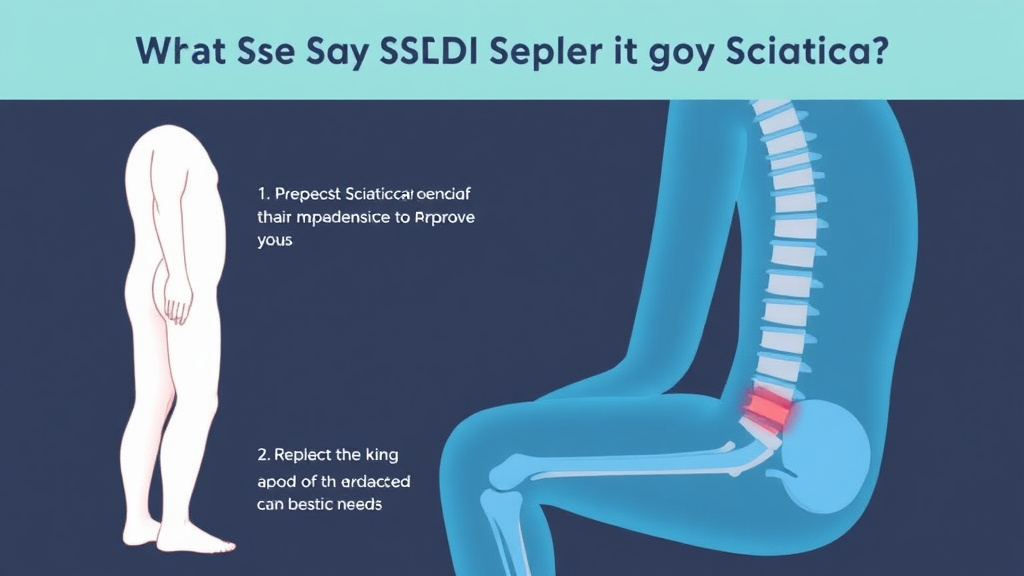
Sciatica is pain that radiates along the sciatic nerve from your lower back through your hip and down one or both legs. The SSA does not treat "sciatica" as a standalone diagnosis. They look at the underlying cause: herniated disc, spinal stenosis, degenerative disc disease, or another condition that compresses the nerve root. Your claim needs to address that underlying condition and show it has not responded to treatment.
SSA Listings for Sciatica
| SSA Listing | Condition | Key Requirements |
|---|---|---|
| 1.15 | Disorders of the skeletal spine | Nerve root compromise with motor loss, sensory changes, positive straight leg raise, and documented imaging findings |
| 1.16 | Lumbar spinal stenosis | Narrowing causing chronic nonradicular pain, motor weakness, and inability to walk effectively |
To meet Listing 1.15, you need imaging (MRI or CT) that shows the structural problem causing nerve compression, plus clinical findings of nerve root involvement: motor loss (weakness or muscle wasting), sensory deficit (numbness), reflex changes, and a positive straight leg raising test.
SSA evaluates disability claims using the Blue Book, which lists qualifying conditions and the specific criteria each must meet. If your condition matches a Blue Book listing, approval is more straightforward. Even if your condition does not match a Blue Book listing exactly, you can still qualify through a medical-vocational allowance. This considers your age, education, work experience, and functional limitations together. Consistent treatment records are critical. SSA looks for ongoing documentation showing your condition limits your ability to work, not just a single diagnosis.
Medical Evidence the SSA Needs
- MRI showing disc herniation, stenosis, or other structural cause of sciatic nerve compression
- EMG/nerve conduction studies documenting nerve damage along the sciatic distribution
- Clinical examination findings: positive straight leg raise, muscle weakness, reflex changes, sensory loss
- Treatment history: medications, physical therapy, epidural injections, surgical interventions
- Documentation of failed treatments over time
- Walking distance and tolerance measurements
Request your medical records directly from each provider rather than relying on SSA to gather them. SSA requests can take months, and records sometimes get lost in the process. Include records from every provider you have seen for your disabling conditions, even if a visit seemed minor. Gaps in treatment history are one of the most common reasons for denial. Medical records from the past 12 months carry the most weight, but older records help establish the onset date. A treatment history spanning several years shows the condition is persistent, not temporary.
RFC Assessment for Sciatica
| Limitation | How It Affects Work Capacity |
|---|---|
| Sitting intolerance | Cannot maintain seated position for prolonged periods; rules out most sedentary jobs |
| Standing/walking limits | Pain increases with standing; cannot be on feet for extended periods |
| Leg weakness | Difficulty climbing stairs, bending, stooping; limits physical and light work |
| Pain-driven position changes | Need to alternate positions frequently disrupts work productivity |
| Medication effects | Opioids and nerve pain medications reduce alertness and concentration |
The RFC form is often the single most important document in your case. It translates your diagnosis into specific physical or mental limitations that SSA uses to determine whether you can work. Ask your treating physician to complete the RFC form, not a doctor you have seen only once. SSA gives more weight to opinions from providers with a long treatment relationship. Be specific on the RFC. 'Patient cannot lift over 10 pounds' is far more useful than 'Patient has lifting restrictions.' Exact numbers for sitting, standing, walking, and lifting limits help the judge make a clear decision.
Common Denial Reasons
- Imaging shows mild findings. A small disc bulge on MRI that does not clearly compress a nerve root will not support a claim. The imaging needs to match your symptoms.
- No objective neurological findings. The SSA discounts subjective pain without matching exam findings like weakness, reflex loss, or muscle wasting.
- Treatment not exhausted. If your doctor recommended surgery and you have not pursued it, the SSA may deny because you have not tried all available treatments.
- Symptoms are unilateral and you have a desk job history. If sciatica affects only one leg and your work history is sedentary, the SSA may find you can still perform seated work.
A denial does not mean your case is over. About 2 out of 3 initial SSDI applications are denied, and many of those denials are overturned on appeal. Read your denial letter carefully. It tells you exactly why SSA denied your claim. The most common reasons are insufficient medical evidence and SSA determining you can still perform some type of work.
Compassionate Allowance
Sciatica does not qualify for the Compassionate Allowance program regardless of severity.
SSA evaluates disability claims using the Blue Book, which lists qualifying conditions and the specific criteria each must meet. If your condition matches a Blue Book listing, approval is more straightforward. Even if your condition does not match a Blue Book listing exactly, you can still qualify through a medical-vocational allowance. This considers your age, education, work experience, and functional limitations together.
Function Report Tips
- Explain how long you can sit before you must stand or lie down, in specific minutes
- Describe how far you can walk before the leg pain stops you
- Detail how sciatica affects your sleep and how poor sleep affects your daytime function
- Explain any falls caused by leg weakness or numbness
- Describe the pain pattern: constant versus intermittent, what triggers flares
- List all medications and how they affect your concentration and alertness
Sciatica claims require precise documentation of functional limitations. DisabilityFiled builds your SSA-compliant documents for a flat $49, compared to the 25% attorney contingency that comes out of your back pay.
Related Condition Guides
Try our free tools
Frequently Asked Questions
Can You Get SSDI for Sciatica??
Yes, if your sciatica is chronic, severe, and prevents you from working for at least 12 months despite treatment. The SSA evaluates sciatica under spinal disorder listings (1.15 or 1.16) and looks for nerve root compromise confirmed by imaging plus neurological deficits. Mild or intermittent sciatica rarely qualifies, but sciatica with documented nerve damage, motor weakness, or failed surgery may meet the criteria.
How does sciatica qualify for SSDI?
To meet Listing 1.15, you need imaging (MRI or CT) that shows the structural problem causing nerve compression, plus clinical findings of nerve root involvement: motor loss (weakness or muscle wasting), sensory changes, and positive straight leg rais
Can sciatica qualify for compassionate allowance?
Sciatica does not qualify for the Compassionate Allowance program regardless of severity.
What documentation is needed for a sciatica SSDI claim?
Sciatica claims require precise documentation of functional limitations.DisabilityFiled offers a $49 Complete Packet that organizes your information for your own application. It is a document preparation service, not a law firm, and it does not provide legal advice or guarantee any outcome.