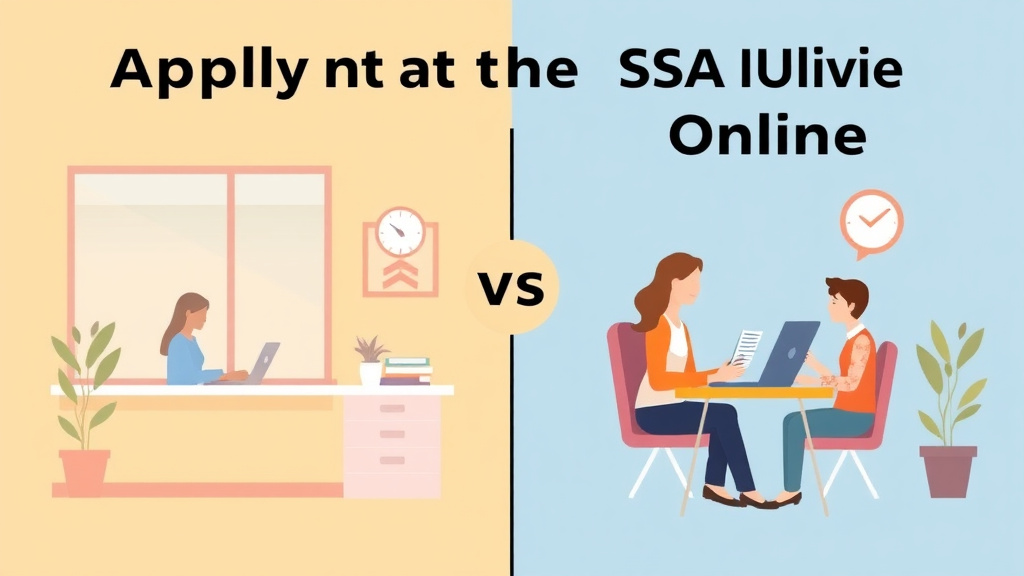
Applying at the SSA Field Office vs Online: Pros and Cons
TL;DR: You can apply for SSDI online at ssa.gov (takes 1-2 hours), by phone (1-800-772-1213), or in person at a field office. Online is faster and you can save progress. In-person lets you ask questions and ensures forms are complete. SSI cannot be fully completed online; you must visit an office or call. For SSDI, online applications are generally recommended unless you have complex circumstances. Either way, the medical evidence matters more than the filing method.
The SSDI application process takes an average of 3 to 6 months for an initial decision. If denied, the appeals process can add another 12 to 24 months depending on your region. Having complete and detailed medical documentation is the single biggest factor in SSDI approval. Request records from all treating providers before submitting your application. Many claimants benefit from organizing their medical history into a timeline showing how their condition has progressed. This helps SSA reviewers see the full picture without searching through hundreds of pages.
Comparison
| Factor | Online | In-Person | Phone |
|---|---|---|---|
| Availability | 24/7 | Business hours, appointment preferred | Business hours |
| Time to complete | 1-2 hours (can save/resume) | 1-3 hours per visit | 1-2 hours |
| SSDI application | Yes, fully online | Yes | Yes |
| SSI application | Partial (must complete by phone/office) | Yes | Yes |
| Questions answered | No (FAQ only) | Yes (staff can help) | Yes |
| Document submission | Upload or mail separately | Hand deliver copies |
When it comes to comparison, the details matter. This guide walks through comparison step by step.
When to Go In Person
- Applying for SSI (can't complete fully online)
- Complex work history or immigration status
- Need help completing forms
- Want to establish a protective filing date in person
- Have documents you want to submit immediately
When it comes to comparison, the details matter. The details covered here apply to your specific situation.
Related Articles
The SSDI application process takes an average of 3 to 6 months for an initial decision. If denied, the appeals process can add another 12 to 24 months depending on your region. Having complete and detailed medical documentation is the single biggest factor in SSDI approval. Request records from all treating providers before submitting your application. Many claimants benefit from organizing their medical history into a timeline showing how their condition has progressed. This helps SSA reviewers see the full picture without searching through hundreds of pages.
Key Facts About the SSDI Process
Consultative examinations (CEs) are medical exams that SSA pays for when your existing medical evidence is insufficient. A CE is typically brief, lasting 15 to 30 minutes. The examiner may not be a specialist in your condition. Because CEs are short and conducted by unfamiliar providers, they often understate your limitations. Strong records from your own treating doctors help counterbalance a weak CE report.
Representative payees manage SSDI benefits for individuals who cannot manage their own finances. SSA may appoint a representative payee if the beneficiary is a minor, has a severe mental impairment, or has demonstrated inability to handle financial matters. The payee is responsible for using the funds to meet the beneficiary's basic needs and must file an annual accounting with SSA.
SSA's sequential evaluation process has five steps. Step 1 checks whether you are working above SGA. Step 2 determines whether your impairment is severe. Step 3 compares your condition to the Blue Book listings. Step 4 evaluates whether you can perform your past relevant work given your RFC. Step 5 considers whether other jobs exist in the national economy that you could perform. Most claims that are approved at Steps 4 or 5 go through the medical-vocational guidelines.
Your earnings record determines your SSDI benefit amount. SSA calculates your Average Indexed Monthly Earnings (AIME) based on your highest-earning years, then applies a formula to determine your Primary Insurance Amount (PIA). The average SSDI benefit in 2025 is approximately $1,580 per month, but individual amounts range from under $1,000 to over $3,800.
What to Do Next
- Gather your medical records from every provider you have seen in the past 2 years. Request these now, as providers can take 2 to 4 weeks to process records requests.
- Create a my Social Security account at ssa.gov to check your earnings record and estimated benefit amount before applying.
- Write down your daily limitations in specific terms: how long you can sit, stand, walk, lift, and concentrate. You will need these details for the application forms.
- Start your DisabilityFiled application at disabilityfiled.com/intake to organize your application information with the free guided intake.
Understanding the Details
The SSDI application process evaluates whether your medical condition prevents you from performing any type of work that exists in the national economy. SSA uses a five-step sequential evaluation process. First, they check whether you are currently working above the SGA limit. Then they assess whether your condition is severe. Next, they compare your condition to the Blue Book listings. If you do not meet a listing, they evaluate your residual functional capacity and determine whether you can do your past work or any other work.
Many claimants underestimate the importance of the function report (SSA Form 3373). This form asks you to describe your daily activities, social interactions, and physical/mental abilities in your own words. Be honest and specific. Instead of writing 'I can't do much,' describe exactly what you struggle with: 'I can wash dishes for about 5 minutes before my hands go numb and I have to stop. Loading the dishwasher requires bending, which causes sharp pain in my lower back.'
Medical evidence is the foundation of every SSDI claim. SSA requires evidence from acceptable medical sources, which include licensed physicians, psychologists, optometrists, podiatrists, and qualified speech-language pathologists. Treatment notes, imaging results, lab work, and psychological testing all contribute to the evidence file. The more detailed and specific your medical records are, the easier it is for SSA to evaluate your claim.
The SSDI waiting period is 5 full calendar months from your established onset date. This means your first SSDI payment covers the sixth full month of disability. For example, if SSA determines your onset date is January 15, your first payable month is July, and you would receive your first payment in August. Backpay covers the months between your first payable month and the month your claim was approved.
Try our free tools